What You Can and Cannot Bring Into the Dominican Republic
Understanding what you can bring into the country — and what must be declared — saves time at the baggage hall and helps you fill in the customs section of your E-Ticket with confidence.
Clara · 19 November 2026 · 8 min read
Customs clearance in the Dominican Republic is, for the vast majority of visitors, a straightforward and quick affair. You collect your bags, walk through the hall, and push a button — more on that in a moment. Even so, it pays to know the basic rules before you travel. Understanding what you can bring in duty-free, what needs to be declared, and what is simply not allowed means you will not be caught off guard at the border, and it makes filling in your pre-arrival paperwork a good deal easier too.
The E-Ticket and customs declarations
Before you arrive in the Dominican Republic, you are required to complete an E-Ticket — the country's digital entry and customs declaration form. The customs section asks you to declare whether you are carrying goods above the duty-free threshold, amounts of cash or monetary instruments above the declaration limit, food, plants, animals, or other regulated items.
It is worth reading through the customs questions carefully when you fill in the form, rather than rushing through them. What you declare (or do not declare) on the E-Ticket is consistent with what customs officers can inspect in the baggage hall, so it is sensible to have a clear picture of what is in your luggage before you sit down to complete it.
Duty-free allowances: what you can bring in without paying tax
The Dominican Republic sets duty-free limits on the goods arriving travellers can bring in for personal use. If you stay within those limits, you will not owe any import duties. Broadly speaking, the framework covers three categories: tobacco and alcohol, personal electronics and goods, and the total value of items you are bringing into the country.
As a general guide, travellers are typically permitted to bring in a reasonable quantity of cigarettes or cigars, a limited amount of alcohol, and goods up to a certain declared value without paying customs duty. The precise figures can change, so always check the latest thresholds with the Dominican Republic's customs authority (Dirección General de Aduanas) or confirm them when completing your E-Ticket.
The key principle is personal use. Customs officers are looking for items that appear to be for resale or commercial purposes — large quantities of the same product, for example, or goods still in retail packaging in bulk. If what you are carrying is clearly for your own use during a holiday, you are very unlikely to have a problem.
Duty-free: what to keep in mind
- Alcohol
- A limited quantity per adult traveller is generally permitted duty-free — confirm the exact amount before travel.
- Tobacco
- A reasonable personal supply of cigarettes or cigars is usually allowed; bulk quantities raise scrutiny.
- Goods value
- Items above the duty-free value threshold must be declared and may attract import duty.
- Personal electronics
- Laptops, cameras and phones for personal use are generally fine; multiple units of the same item may not be.
- Gifts
- Gifts count toward your overall goods allowance, so factor them in when packing.
Declaring cash and monetary instruments
If you are travelling with cash, traveller's cheques, or other monetary instruments above a certain value, you are required to declare them. This applies to both money you are bringing into the country and money you are taking out. The declaration threshold is set by Dominican law and can be confirmed through the customs authority; it is not an obscure rule — many countries have an equivalent requirement.
Declaring does not mean the money will be confiscated. It is a transparency measure, and as long as the funds are legitimate, the process is administrative rather than punitive. Failing to declare when you should, however, can result in fines or the funds being held, so it is not worth the risk.
Restricted items: what requires a permit or special care
Some items can enter the Dominican Republic, but only under specific conditions or with the right documentation. If you are travelling with any of the following, do your research before you pack:
- Prescription medication: Bring enough for your stay in the original labelled packaging, along with a copy of your prescription or a letter from your doctor. Controlled substances are subject to stricter rules, and you should check whether your specific medication is permitted well in advance of travel.
- Firearms and ammunition: These require prior authorisation from the relevant Dominican authorities. Do not attempt to bring a firearm without the correct permits — the consequences are serious.
- Drones: Unmanned aerial vehicles are subject to regulations in the Dominican Republic. If you plan to fly a drone, research the current rules and any permits required before you travel.
- Fresh food from outside the region: The Dominican Republic has plant and animal health controls in place to protect its agriculture. Fresh fruit, vegetables, meat and dairy from outside the country may be restricted or prohibited. Commercially sealed, processed foods are generally less of a concern, but anything fresh or homemade deserves a second thought.
- Plants, seeds and soil: These fall under the same biosecurity rules as food. If you are a keen gardener hoping to bring home cuttings, check the rules carefully — both for entering the Dominican Republic and for returning to your home country.
- Pets: Bringing an animal into the Dominican Republic requires health certificates, vaccinations records and potentially other permits depending on the species. Start the process well before your travel date.
Prohibited items: what you must leave behind
Certain items are prohibited outright and cannot be brought into the Dominican Republic under any circumstances. The list is broadly similar to what you would find in most countries, but it is worth spelling out the main categories:
- Illegal drugs and narcotics: The Dominican Republic takes drug offences extremely seriously. Penalties are severe, and there is no grey area here.
- Counterfeit goods: Fake branded products — clothing, watches, electronics — are prohibited. This includes items you might have picked up cheaply elsewhere and are bringing in as gifts.
- Obscene or seditious material: This covers printed material, videos or digital content deemed obscene or politically seditious under Dominican law.
- Certain agricultural products: Some fresh produce and animal products are banned outright rather than simply restricted, particularly where they pose a disease risk.
- Endangered species and their products: Items made from protected animals — certain leathers, ivory, shells, coral — are prohibited under CITES regulations, to which the Dominican Republic is a signatory.
What to expect in the baggage hall
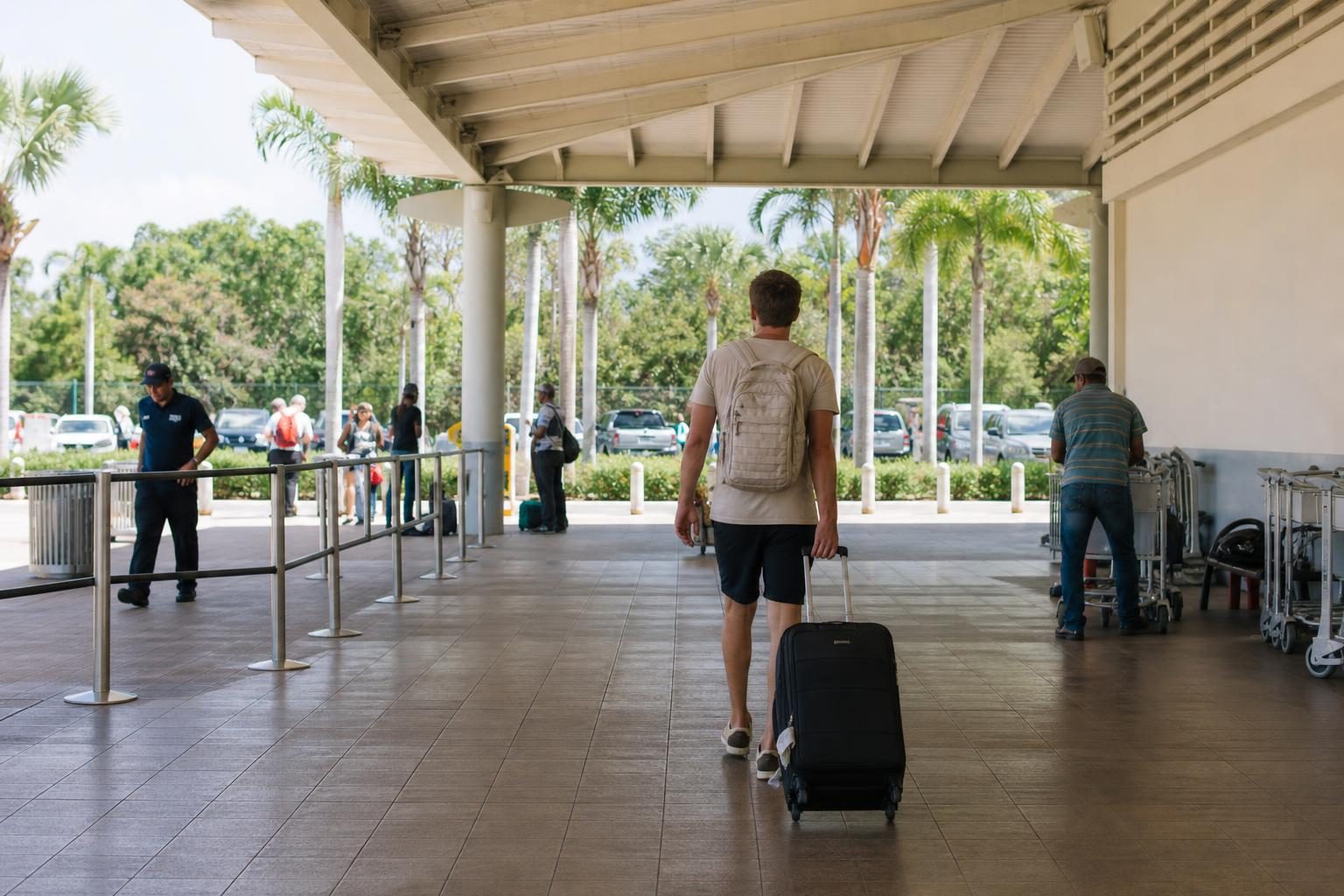
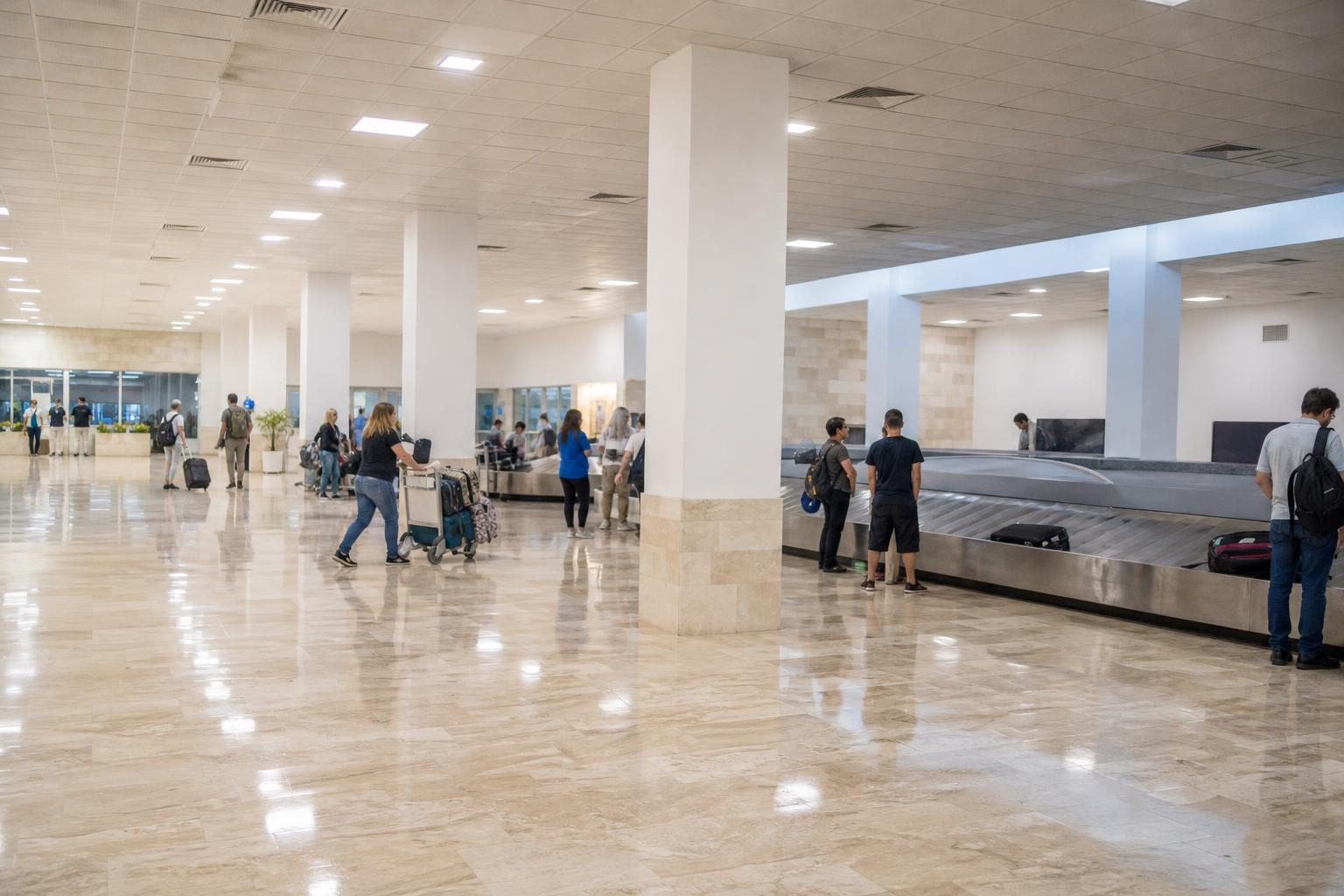
Once you have collected your luggage, you will pass through the customs area. The Dominican Republic uses a randomised inspection system — travellers press a button, and a green or red light indicates whether their bags will be checked. Green means you can proceed straight through. Red means a customs officer will inspect your luggage.
A red light is not an accusation. It is a random selection, and officers are generally professional and efficient. Having your E-Ticket confirmation accessible on your phone, keeping your luggage organised, and being straightforward about the contents of your bags all make the process faster and easier. If you have declared items on your E-Ticket, have the relevant documents or receipts ready.
Travellers arriving with large amounts of new goods, appliances or items that look commercial in quantity should expect more scrutiny regardless of the light colour. Customs officers are experienced at identifying what looks like a personal travel wardrobe and what might be intended for resale.
Before you pack: a quick customs checklist
- Check the current duty-free allowances for alcohol, tobacco and goods on the Dominican customs authority website.
- If carrying prescription medication, pack the original packaging and a copy of your prescription.
- Confirm the cash declaration threshold if you are travelling with a large amount of currency.
- Research drone regulations if you plan to bring an unmanned aerial vehicle.
- Check the requirements for bringing a pet at least several weeks before travel.
- Avoid packing fresh fruit, vegetables or meat from outside the Caribbean.
- Complete your E-Ticket, including the customs section, before you fly.
- Keep receipts for new high-value items (cameras, laptops, jewellery) in your carry-on.
Frequently asked questions
Do I need to declare gifts I am bringing for friends in the Dominican Republic?
Yes — gifts count toward your duty-free goods allowance. If the total value of everything you are bringing in, including gifts, exceeds the threshold, you should declare it. Keep receipts where possible.
Can I bring food into the Dominican Republic?
Commercially packaged and processed food is generally less likely to cause problems. Fresh fruit, vegetables, meat and dairy products from outside the region are subject to restrictions and may be confiscated. If you are unsure about a specific item, declare it and let the customs officer decide.
What happens if I get a red light at customs?
A customs officer will inspect your luggage. It is a random process, not a targeted search. Be straightforward, have your E-Ticket confirmation to hand, and ensure anything you declared is easy to locate in your bags.
Is there a limit on how much cash I can bring into the Dominican Republic?
You can bring in cash, but amounts above the declaration threshold must be declared on arrival. The specific figure is set by Dominican law — check the current threshold before you travel, as it can change.
Can I bring a drone to the Dominican Republic?
Drones are subject to regulations in the Dominican Republic, including rules about where and when they can be flown. Research the current requirements and any permits needed before you travel, particularly if you plan to fly near national parks or resort areas.
What should I do if I am unsure whether something needs to be declared?
Declare it. Declaring an item you did not need to declare creates no issue. Failing to declare something you should have can result in fines or other penalties. When in doubt, transparency is always the better approach.