Getting Around the Dominican Republic: Buses, Guaguas and Car Hire
The Dominican Republic is not especially large, but getting between its very different regions requires a bit of planning — this guide lays out every realistic option for independent travellers.
Clara · 19 November 2026 · 9 min read
The Dominican Republic is not a large country, but the distances between its most rewarding corners add up faster than you might expect. Getting from Santo Domingo to the Samaná Peninsula, or from Santiago to the border town of Dajabón, requires either patience, planning or both. The good news is that there are several ways to do it — ranging from comfortable, punctual coaches to rattling shared minibuses that stop wherever someone waves from the roadside. Understanding which option suits each leg of your trip will save you time, money and no small amount of confusion.
Before you arrive: the E-Ticket
Before any of this matters, you need to get into the country. The Dominican Republic requires most visitors to complete an E-Ticket — an electronic entry and exit declaration — before they arrive. It covers customs, immigration and health information in a single form, and border agents will expect to see it. Completing it in advance, rather than scrambling at the airport, makes for a much smoother arrival.
Long-distance coaches: the comfortable option
For journeys between the major cities, the private coach companies are genuinely good. The two operators you will hear about most are Caribe Tours and Metro Bus. Between them they cover most of the main routes: Santo Domingo to Santiago, Santo Domingo to Puerto Plata, Santiago to Monte Cristi, and several others. Seats are numbered, the air conditioning often borders on arctic, and the buses tend to leave close to their advertised times.
Fares are low by any international standard — a Santo Domingo to Santiago ticket costs a fraction of what a similar distance would in Europe or North America. Terminals are usually located in city centres, though in Santo Domingo the two companies operate from different points, so it is worth checking which one serves your destination before you head out.
A few things to know: bring a layer for the air conditioning, and do not expect to find left-luggage facilities at smaller terminals. On popular routes at weekends, buying a ticket a day ahead is sensible. Neither company covers every corner of the country, which is where the guagua network becomes essential.
Long-distance coaches at a glance
- Main operators
- Caribe Tours, Metro Bus
- Key routes
- Santo Domingo ↔ Santiago, Santo Domingo ↔ Puerto Plata, Santiago ↔ Monte Cristi
- Booking
- In person at the terminal; some routes bookable by phone
- Luggage
- Stored in the hold; keep valuables with you
- What to bring
- A light jacket — the air conditioning is cold
Guaguas: how most Dominicans actually travel
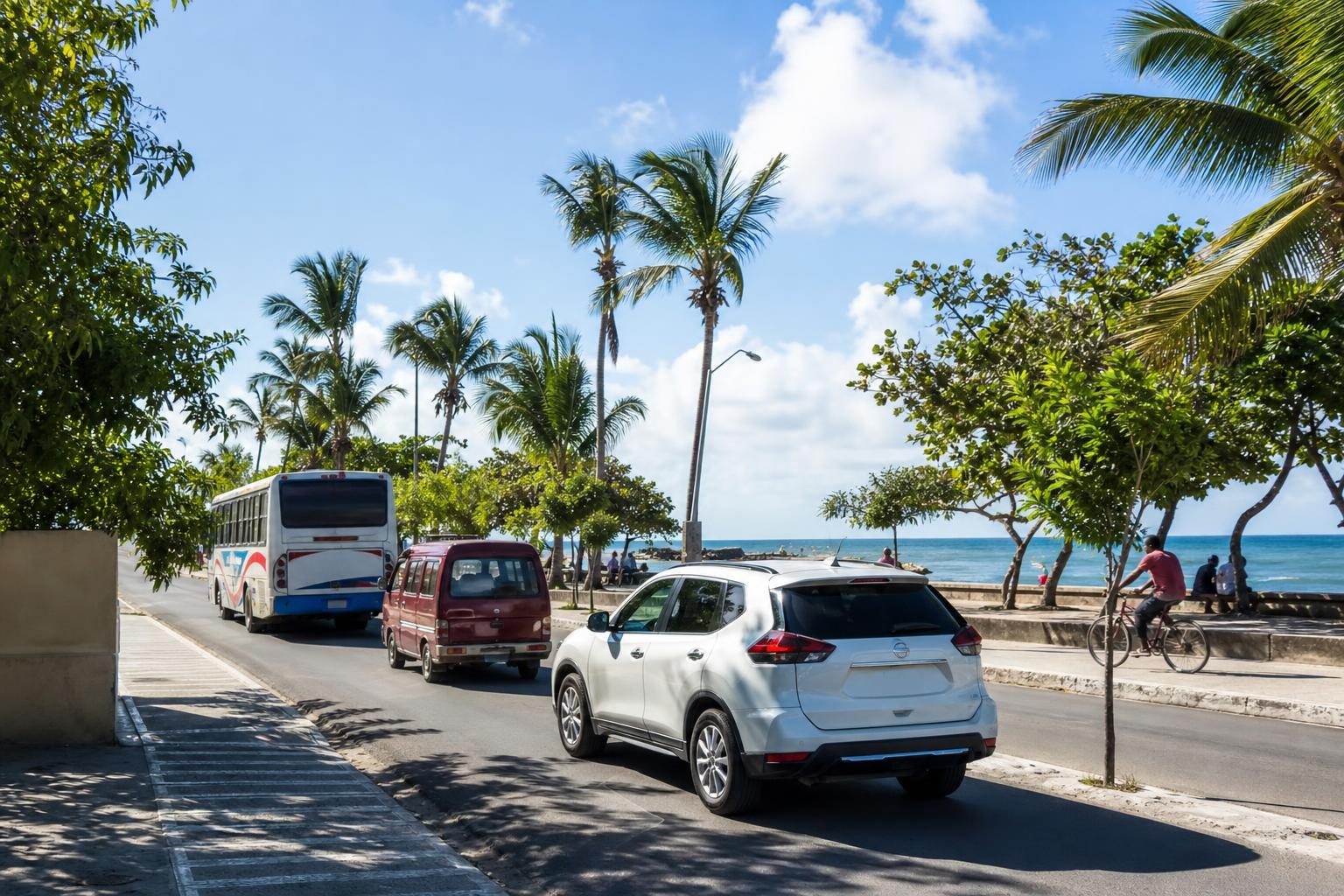
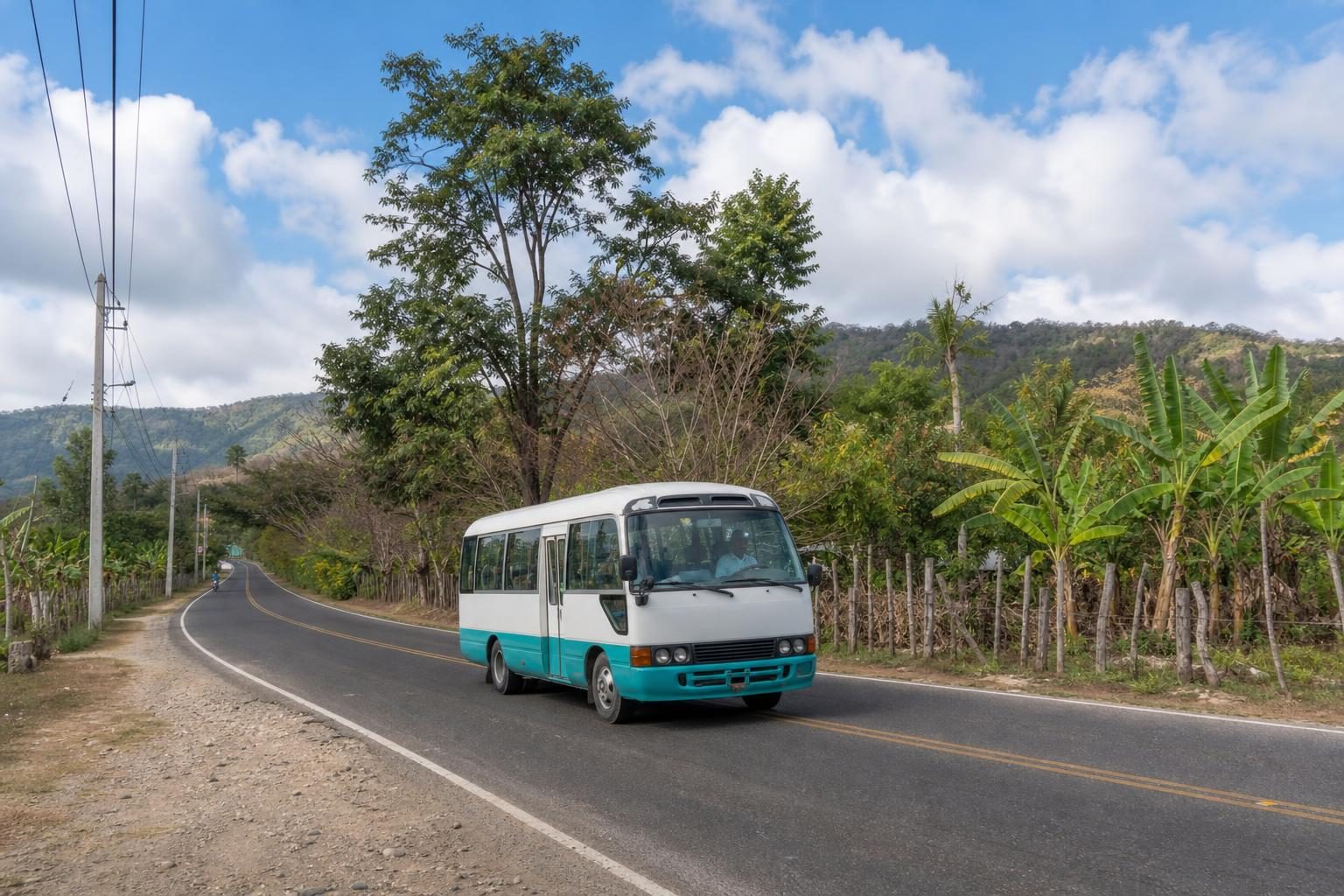
Away from the main intercity routes, the country runs on guaguas — shared minibuses and vans that connect towns, villages and barrios in a system that has no published timetable and needs none, because vehicles leave when they are full. The result is a network of extraordinary reach that gets surprisingly thin on the ground in mountainous areas after dark.
Using guaguas takes a little adjustment. You find the right departure point — often an informal rank near a market or a central park — by asking locals. You pay a fixed fare that is usually very small, handed directly to the driver or his assistant. The vehicle will stop to pick up and drop off passengers along the route, so journey times vary. At busy times, guaguas carry considerably more passengers than feels comfortable, but this is simply how they work and no one around you will think anything of it.
For travellers, guaguas are invaluable for reaching places coaches do not go: the villages of the Cordillera Central, the smaller towns of the Cibao valley, or the quieter end of a peninsula. The trade-off is that you are entirely dependent on knowing where to wait and when to change. Carrying small-denomination pesos is essential — drivers rarely have change for large notes.
Hiring a car: freedom with caveats
A hire car transforms what you can do in the Dominican Republic. The mountain roads of the Cordillera Central, the remote beaches of the Barahona coast, the back roads of the Samaná Peninsula — all of them become genuinely accessible rather than dependent on guagua schedules or the goodwill of motoconcho drivers. For a group of three or four splitting costs, it also becomes surprisingly affordable.
The main international rental companies operate from Las Américas airport and from Santiago, and there are local operators in most tourist areas. Rates and conditions vary widely, so a few points deserve attention before you sign anything.
What to check in a rental agreement
- Insurance coverage: Basic liability insurance is usually included, but collision damage waivers and theft protection are often sold separately. Read what is and is not covered before declining anything.
- Road restrictions: Many standard rental contracts prohibit driving on unpaved roads. In a country where some of the most interesting routes are unpaved, this matters. If you plan to explore rural areas, ask specifically about restrictions and consider whether you need a 4WD vehicle.
- Fuel policy: Confirm whether the car comes full and should be returned full, or whether a different arrangement applies.
- Condition of the vehicle: Walk around the car and photograph every existing scratch, dent and scuff before driving away. Make sure all damage is noted on the paperwork.
Driving in the Dominican Republic
Driving here requires alertness. Roads in and around the main cities can be congested, poorly lit at night and subject to potholes appearing without warning. Traffic laws exist but are not always observed with great enthusiasm. Speed bumps — called muertos, literally 'dead men' — are common on approaches to towns and are sometimes unmarked. On rural roads, slow-moving vehicles, livestock and pedestrians are all reasonable things to encounter around any bend.
That said, most independent travellers who hire a car here manage perfectly well. The driving is busy rather than aggressive, and once you are outside the cities the roads often open up considerably. Having offline maps downloaded before you go is strongly advisable, since mobile data coverage is patchy in mountainous areas.
Motoconchos: useful, but know the limits
A motoconcho is a motorcycle taxi, and in smaller towns and villages they are often the only transport option for the last mile or two. They are cheap, quick and can navigate tracks that no four-wheeled vehicle would attempt. In some coastal and mountain areas, they are simply how things work, and refusing to use them would leave you stranded.
That said, they come with real risks. Helmets are frequently unavailable or not offered. Drivers' abilities vary considerably. On steep, unpaved or wet roads the margin for error is small. The sensible approach is to use motoconchos for short, straightforward transfers — from the guagua drop-off to your guesthouse, for instance — rather than for long journeys on difficult terrain. If you are uncomfortable with any driver or route, trust that instinct.
In larger towns you will also find carros públicos — shared cars that run fixed routes, much like guaguas but in saloon cars — and in cities, app-based ride-hailing has become more common, though availability outside Santo Domingo and Santiago remains limited.
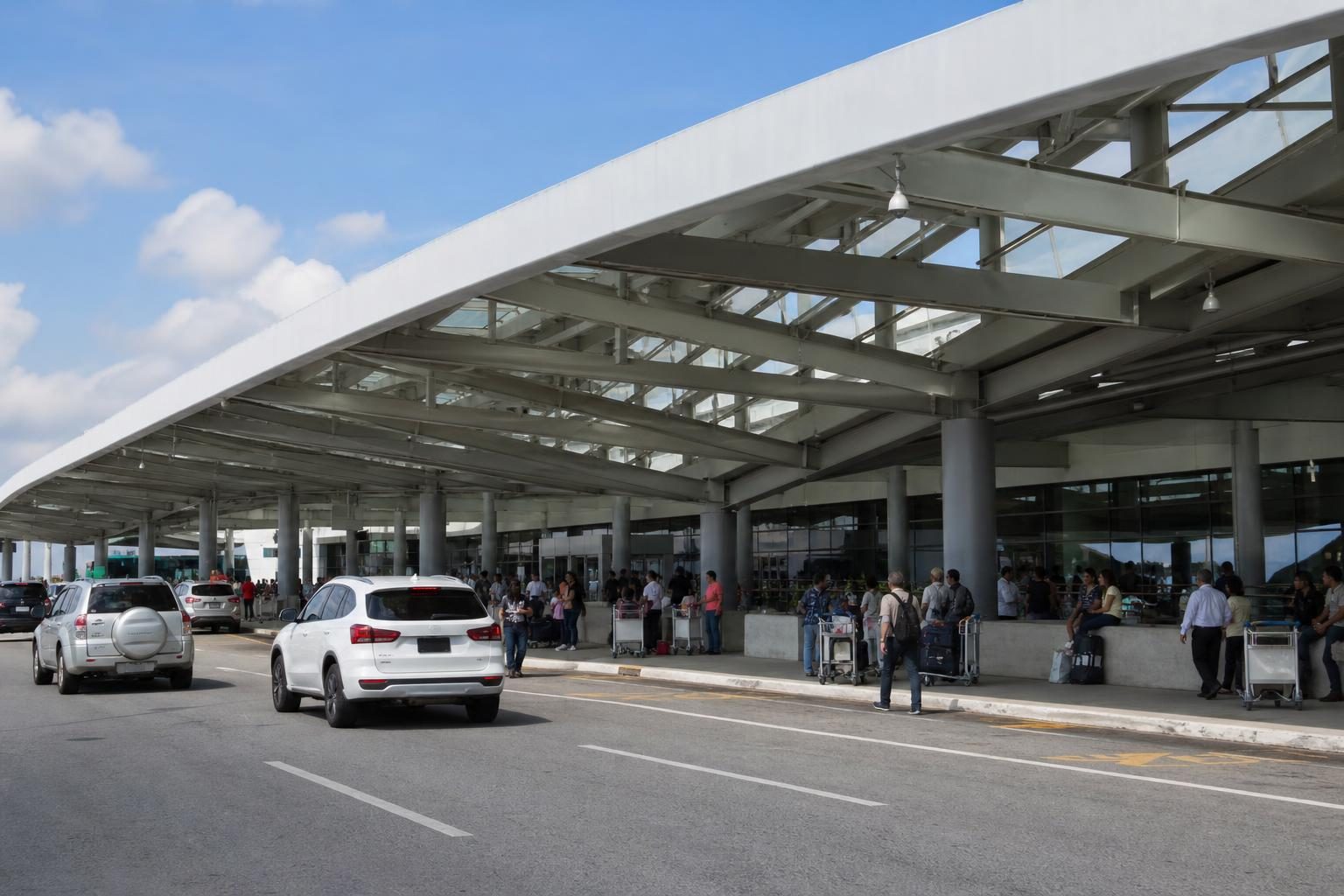
Getting from Las Américas airport into Santo Domingo
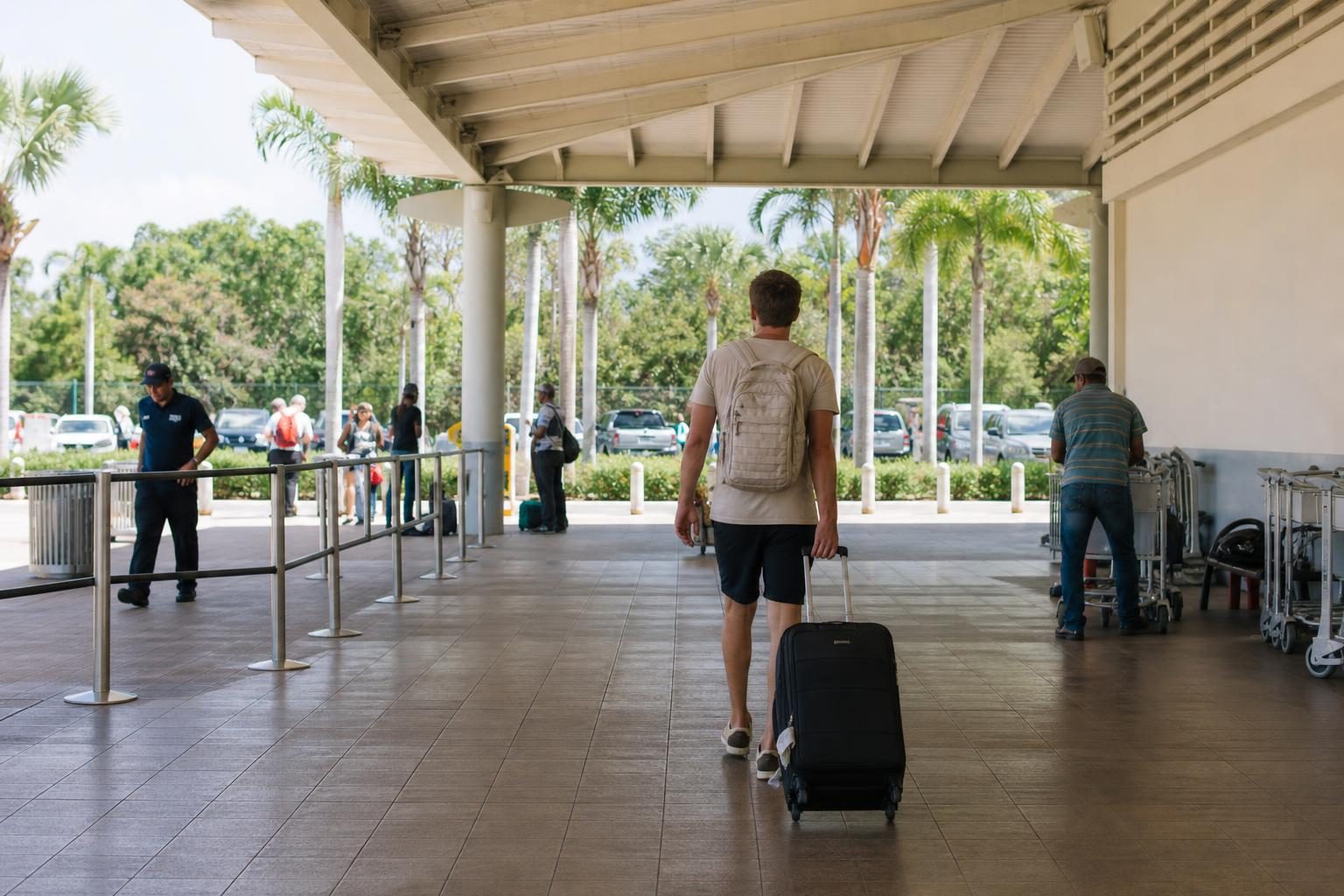
Las Américas International Airport sits roughly 25 kilometres east of the city centre. How you cover that distance sets the tone for the whole trip.
The official taxi rank outside arrivals is the safest and most straightforward option. Fares are set by zone and should be agreed before you get in; there is no meter. Prices are posted at the taxi desk inside the terminal, so check them before you walk outside, where informal drivers may approach you with different offers.
Some hotels and guesthouses in Santo Domingo offer a pick-up service, often for a fixed fee agreed in advance. If yours does, it is usually worth taking it on a first visit — arriving in an unfamiliar city at night is not the moment to negotiate with strangers.
Guaguas do pass near the airport, and experienced budget travellers use them, but navigating the connection with luggage on your first arrival is more trouble than the saving justifies for most people. Save the guagua network for when you have your bearings.
Before you set off around the country
- Complete your E-Ticket before flying — border agents will check it on arrival
- Download offline maps (Maps.me or Google Maps offline) before leaving areas with reliable data
- Carry small-denomination pesos at all times for guaguas and motoconchos
- If hiring a car, photograph all existing damage before driving away from the rental lot
- Check your rental contract for unpaved-road restrictions if you plan to explore rural areas
- Pack a light layer for air-conditioned coaches — it gets cold
- Plan rural driving to arrive before dusk wherever possible
Frequently asked questions
Is it safe to use guaguas as a foreign visitor?
Yes, guaguas are used daily by millions of Dominicans and are a perfectly reasonable way to get around. Keep your bag on your lap, be aware of your belongings in crowded vehicles, and carry small change.
Do I need an international driving permit to hire a car in the Dominican Republic?
Requirements can change, so check with your rental company before you travel. Some companies accept a standard driving licence from your home country; others ask for an international permit. It is worth carrying one to be safe.
How do I get between Punta Cana and Santo Domingo?
The most direct options are flying or hiring a car — the drive takes around three hours on a good day. Coach connections exist but typically involve changing in the capital or in Higüey. Guaguas cover the route in stages but add significant time.
Are taxis metered in the Dominican Republic?
Most taxis in the Dominican Republic do not use meters. Always agree the fare before you get in. At airports, fares are posted at official taxi desks, which gives you a reference point.
Can I use ride-hailing apps like Uber in the Dominican Republic?
Ride-hailing apps operate in Santo Domingo and to a lesser extent in Santiago. Outside these cities, availability is limited and you should not rely on them.
What is the E-Ticket and do I really need it?
The E-Ticket is the Dominican Republic's electronic entry and exit declaration, covering customs and immigration details. Most visitors are required to complete it before arrival. Check the latest requirements before you fly, as the rules can be updated.