Eating Like a Local: A Guide to Dominican Food
Dominican food is filling, flavourful and built around a handful of ingredients cooked with real care — knowing what to look for means you will never need to default to the buffet.
Clara · 19 November 2026 · 10 min read
Dominican food rarely makes the international headlines the way some Caribbean cuisines do, but that suits most Dominicans just fine. The cooking here is honest and filling, built from a short list of ingredients — rice, beans, plantain, root vegetables, slow-stewed meat — that the country has refined over centuries. Eat at a beachfront resort and you will get a sanitised version of it. Step outside and you will find something far more rewarding: a plate piled high at a roadside comedor, a chimichurri burger dripping onto wax paper at midnight, a bowl of sancocho that could sustain you for the rest of the day. This guide is for travellers who want to eat the real thing.
The building blocks of Dominican cooking
A handful of staples appear on almost every Dominican table, and understanding them makes it much easier to navigate a menu — or a comedor's chalkboard — written entirely in Spanish.
Rice and beans
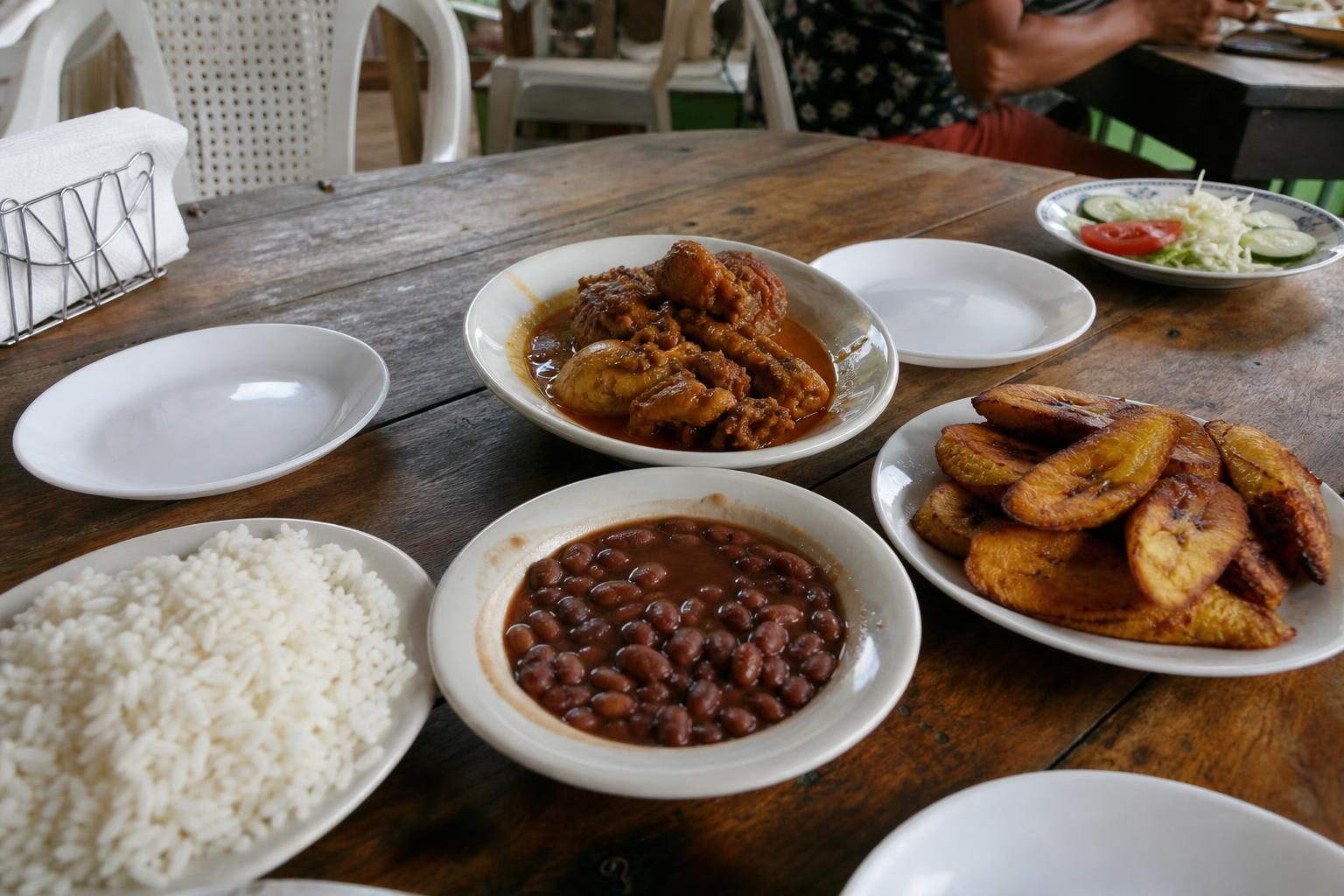
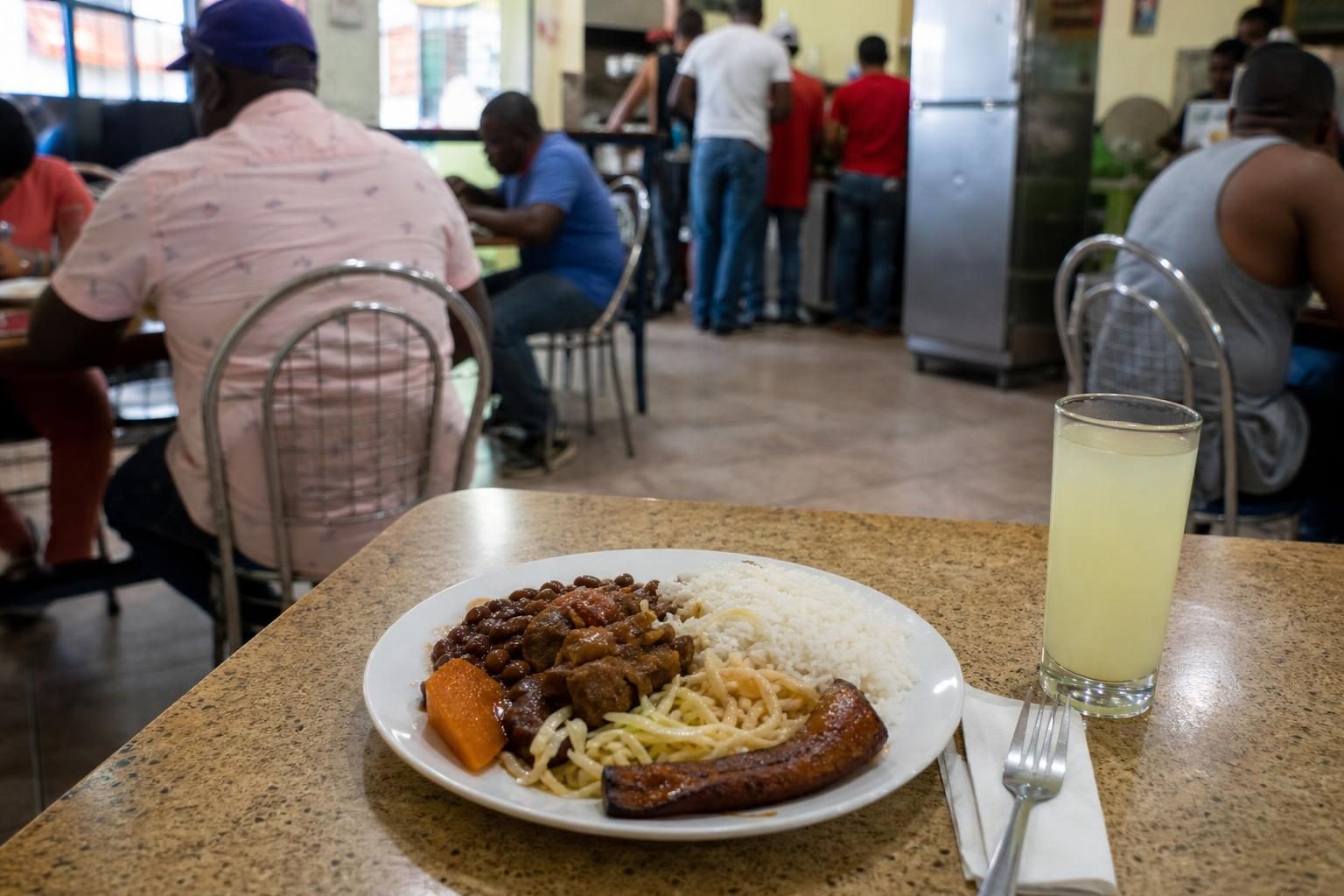
Arroz blanco (white rice) is the foundation of the national diet. It is cooked simply, often with a little oil and salt, and serves as the base for almost every main meal. Alongside it you will almost always find habichuelas guisadas — red kidney beans stewed with sofrito, tomato paste, herbs and sometimes a little sugar. The beans are ladled over or beside the rice and their sauce soaks in; it is one of the more comforting things you can eat.
Plantain in its many forms
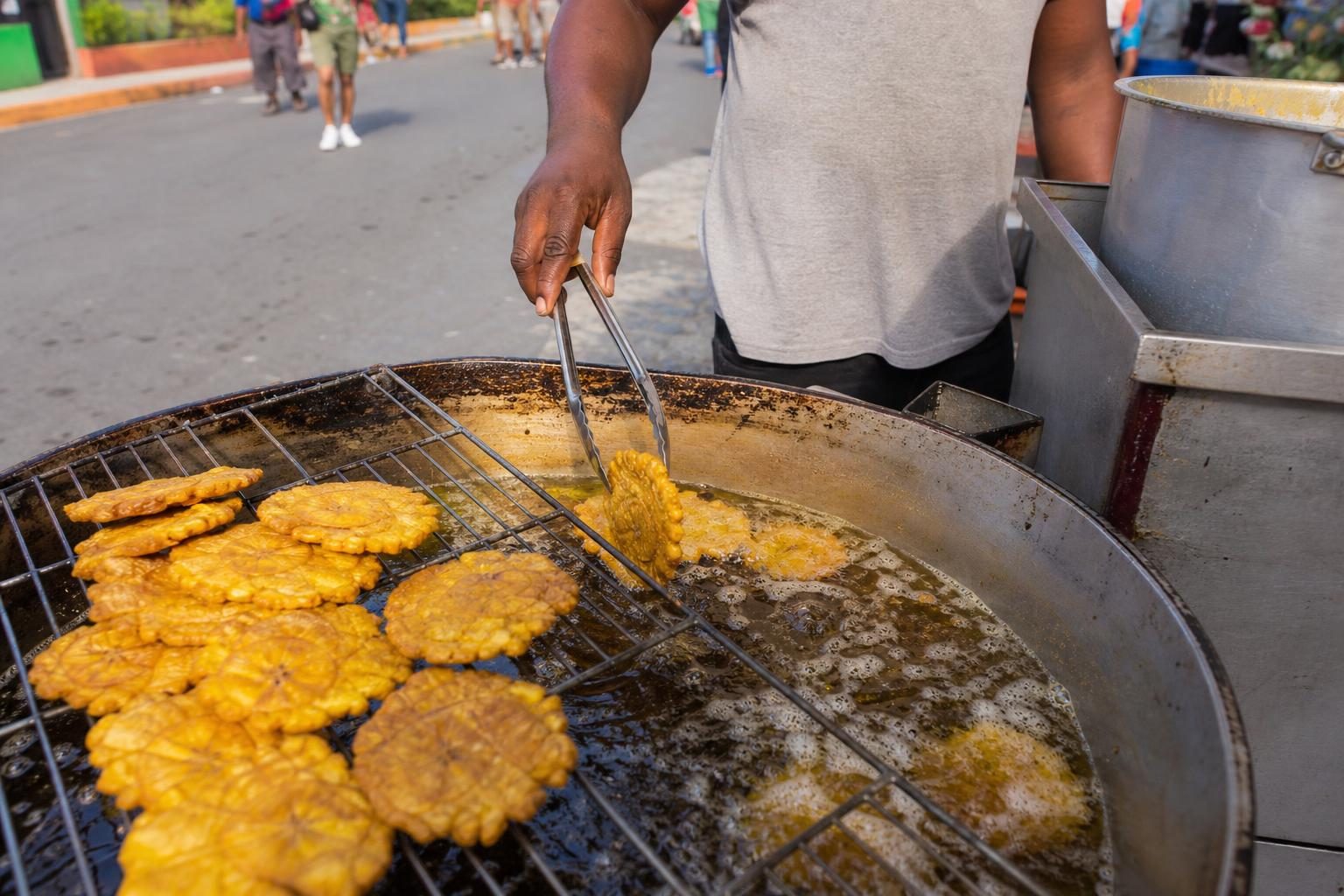
Plantain is the other constant. Tostones are green plantains sliced, fried once, smashed flat, then fried again until crisp — they are served as a side dish or a snack with garlic sauce (mojo). Mangú is mashed boiled green plantain, the classic Dominican breakfast served with sautéed red onions on top and usually accompanied by fried cheese, salami and eggs. Amarillos (sweet fried plantain made from ripe, yellow fruit) appear as a sweeter counterpoint to savoury mains. You will eat plantain in some form every single day.
Meat
Pork and chicken dominate. Pollo guisado — chicken braised in sofrito with tomatoes, peppers and olives — is probably the most common protein on the island. Cerdo asado (roast pork) is a weekend and celebration staple. Goat (chivo) is widely eaten, particularly in the northwest around Monte Cristi, where chivo liniero — a dry-rubbed, slow-cooked preparation — is a point of local pride.
Dominican pantry essentials
- Sofrito
- The aromatic base of most stews: blended onion, garlic, peppers, tomato and herbs
- Sazón
- A seasoning blend — often including cumin, coriander and achiote — used on meat and rice
- Achiote (annatto)
- The seed that gives Dominican rice and stews their distinctive golden-orange colour
- Yuca & ñame
- Root vegetables boiled as sides or used in soups; yuca is also fried like chips
- Ají caballero
- A small, fiery local chilli added to sauces — not everywhere, but worth asking for
La Bandera: the national midday meal
If you eat only one Dominican meal during your trip, make it La Bandera at lunchtime. The name means "the flag", and the dish mirrors the colours of the Dominican banner: white rice, red beans and meat (which provides a loose stand-in for the blue). It is served between roughly noon and two in the afternoon and is considered the main meal of the day across the country.
A full plate of La Bandera includes arroz blanco, habichuelas guisadas, a serving of meat (usually pollo guisado or res — beef), and a side of salad or cooked vegetables. Tostones or amarillos frequently come alongside. At a comedor the whole thing costs very little and portions are generous; at a smarter restaurant the same components may arrive with more finesse, but the logic of the dish stays the same.
Eating La Bandera at lunchtime is not merely a culinary choice — it is the most efficient and affordable way to eat well in the Dominican Republic. Many local workers do not eat a large evening meal; the big midday plate is the rhythm of daily life here.
Comedores versus restaurants: where to eat
The distinction between these two types of eating place is worth understanding before you arrive.
Comedores
A comedor is an informal canteen, sometimes little more than a few plastic tables in someone's front room or a shopfront with a serving hatch. There is rarely a printed menu: the cook makes what they make that day, often just two or three main options. You point, you pay a small amount, you eat. The food is home-style Dominican cooking at its most direct. Comedores are found everywhere — in city neighbourhoods, on the roadside, inside market buildings. They are where most working Dominicans eat lunch.
Restaurants
Sit-down restaurants in the Dominican Republic range from air-conditioned spots in tourist zones to family-run places with paper tablecloths and a television showing baseball. Many serve Dominican food alongside international dishes. Prices vary enormously. In tourist towns like Las Terrenas or Cabarete you will find menus aimed at foreign tastes and priced accordingly; a few streets back from the main drag you will almost always find something more local and cheaper.
Frituras stands
Keep an eye out for frituras stands — roadside or market stalls that fry to order. These are the places to eat tostones, yuca frita, pastelitos (fried pastry pockets filled with meat or cheese) and quipes (a Dominican adaptation of the Lebanese kibbeh, brought by Syrian and Lebanese immigrants in the 19th and 20th centuries — a small but fascinating thread in the island's food history).
Street food worth seeking out
Dominican street food has its own cast of characters, most of them eaten standing up or perched on a stool at a kiosk counter.
Chimichurri burger
Not to be confused with the Argentine herb sauce, a Dominican chimi is the local version of a burger and one of the great late-night foods on the island. A thin beef patty is griddled on a flat iron, then piled into a soft roll with shredded cabbage, tomato, a fried egg and a generous squirt of the vendor's house sauce — usually a mix of mayonnaise, ketchup and sometimes Worcestershire. Chimi carts appear in the early evening and trade until well past midnight.
Sancocho
Sancocho is a substantial stew made with multiple types of meat (seven, in its most elaborate form) and root vegetables including yuca, ñame and ají. It is considered festive food — the dish Dominicans make for large gatherings, Sundays and celebrations — but you will find it in comedores and at markets, particularly on weekends. A bowl of sancocho is warming, deeply savoury and a meal in itself.
Mangú con los tres golpes
The three-hit breakfast — mangú (mashed plantain) with fried cheese, fried salami and fried egg — is sold at breakfast spots across the country from around 6 am. It is heavy, filling and exactly what you need before a long day on the road.
Fresh fruit
Roadside fruit sellers are everywhere. Mangoes here are exceptional, and the island also produces papaya, pineapple, passion fruit, tamarind, sapodilla and several varieties of citrus. A bag of sliced fruit for a few pesos from a street cart is one of the small pleasures of travelling in the Dominican Republic.
Regional variations: coast, city and mountains
Dominican food is not entirely uniform. The country's geography — coastal plains, the highest peaks in the Caribbean, fertile river valleys — creates distinct regional cooking traditions.
The coast
Fishing communities along the north coast (around Nagua and the Samaná Peninsula), the southeast and the Barahona coast eat a lot of fresh fish and seafood. Pescado con coco — fish braised in coconut milk — is a Samaná speciality that varies from cook to cook and is not widely found inland. Grilled whole fish, often red snapper (chillo), served with tostones and a simple salad, is the standard beachside meal and is hard to improve upon.
Santo Domingo
The capital has the country's most varied food scene. The Colonial Zone and surrounding neighbourhoods support everything from traditional Dominican lunch spots to Lebanese bakeries, Chinese canteens and contemporary Dominican restaurants reworking classic dishes. The city is also where you are most likely to encounter locrios — Dominican rice cooked with meat or seafood in one pot, similar in spirit to arroz con pollo but distinctly Dominican in seasoning.
The mountains
In the Cordillera Central, around Jarabacoa and Constanza, the cooler altitude shapes the food. Constanza has long supplied the country with vegetables that struggle in the tropical lowland heat — strawberries, potatoes, carrots, broccoli — and local meals reflect that. Stews are heartier, pork features heavily, and you will find longaniza (a spiced pork sausage) grilled over charcoal at roadside spots in the highlands.
Before you arrive: entry formalities
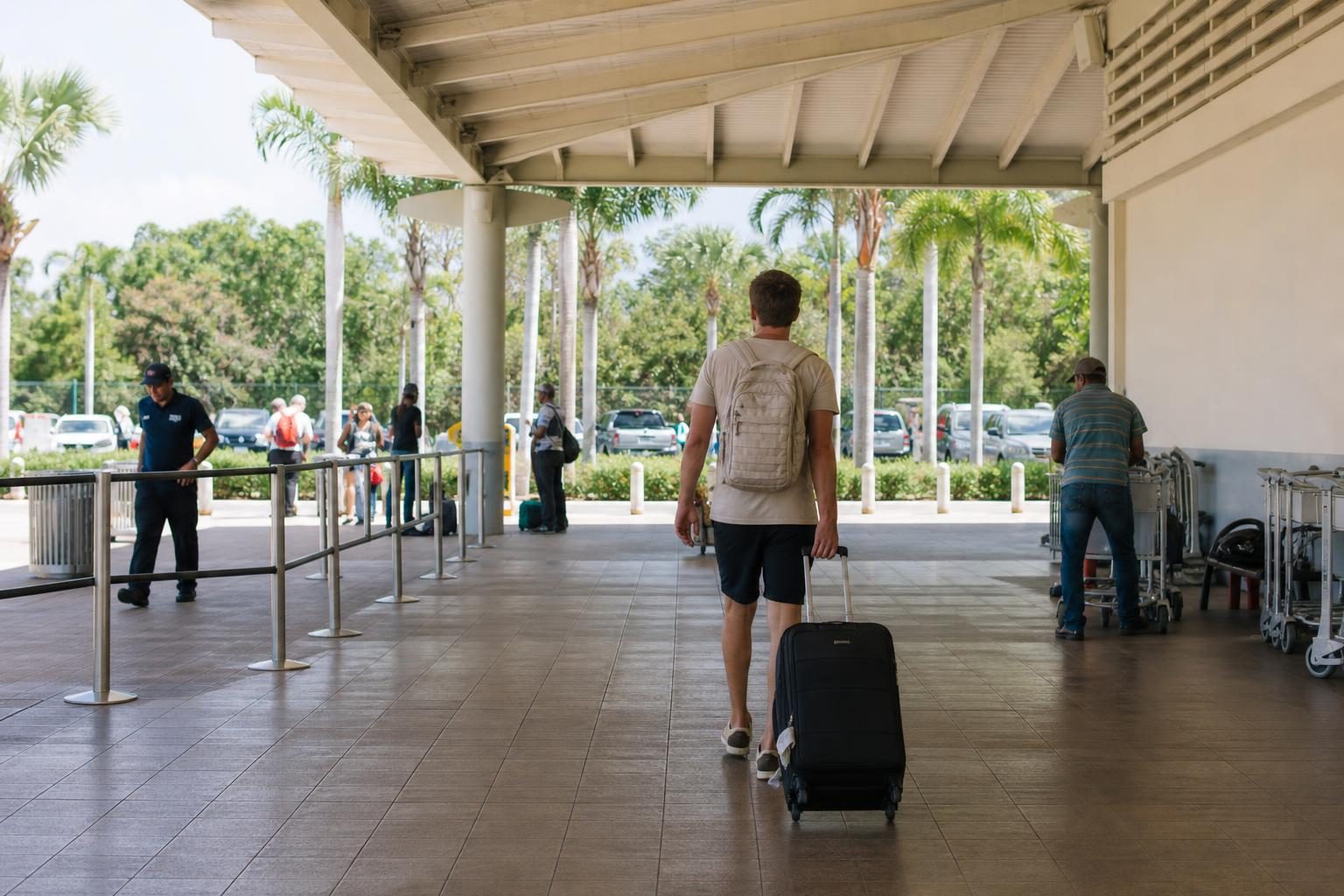
Before you think about your first plate of La Bandera, make sure your entry paperwork is sorted. The Dominican Republic requires most visitors to complete an E-Ticket — an electronic entry and exit form that covers customs and health declarations — before they travel. It is a single online form that replaces the paper cards previously handed out on the plane.
You can read a full explanation in our dedicated article, The Dominican Republic E-Ticket: What It Is and How to Complete It, but the short version is: fill it in before you fly, save your QR code and have it ready at the airport. It is straightforward, but worth doing in advance rather than scrambling for it on arrival.
Practical tips for eating well
A few habits that will serve you well across the country:
- Follow the locals at lunchtime. A comedor with a queue of construction workers or office staff outside is almost always a reliable sign of good, fresh food.
- Learn a few words of Spanish. Menus at comedores are often verbal; being able to say what you want — or ask what is available — goes a long way. "¿Qué hay hoy?" (What's there today?) is a useful opener.
- Ask about the sauce. Dominican food is not typically spicy, but ají caballero sauce is served at some places and can be fierce. If you are sensitive to heat, ask before you pour.
- Drink bottled or purified water and use it when you clean your teeth. Tap water is not reliably safe for travellers in most parts of the country.
- Try the fresh juices. Many small restaurants and cafeterias offer freshly blended fruit juices (jugos naturales) or batidas (blended with milk). Both are excellent and are made to order.
- Evening meals are lighter. If you are expecting a large evening spread, you may be surprised. Dinner for many Dominicans is smaller — often just rice and beans, or a snack. The big eating happens at midday.
Frequently asked questions
Is Dominican food spicy?
Generally, no. Dominican cooking is seasoned and aromatic rather than hot. Spicy chilli sauces exist but are usually offered on the side rather than cooked into dishes, so you can easily control how much heat you have.
Can vegetarians eat well in the Dominican Republic?
It takes some effort. Beans, rice, tostones, amarillos and salads are all vegetarian, but the default assumption is that you eat meat or fish. At a comedor, ask clearly whether a dish contains meat — beans are sometimes cooked with pork. In tourist towns with international restaurants, vegetarian options are easier to find.
How much should I expect to pay at a comedor?
A full plate of La Bandera at a comedor is very affordable by any international standard — typically a fraction of what you would pay at a tourist restaurant. Prices change, so we won't quote specific figures, but budget-conscious travellers find comedores by far the best value eating option in the country.
What is the difference between a locrio and an arroz con pollo?
Both are one-pot rice-and-meat dishes, but a Dominican locrio uses sofrito and local seasonings in a way that gives it a distinct flavour. Locrio can be made with chicken, pork, salami, seafood or even sardines. It is drier and more intensely seasoned than many similar dishes found across the Caribbean.
Where can I try sancocho?
Sancocho is most reliably found at weekends, at markets and at comedores that specialise in it. It is also the dish most likely to appear at any kind of community gathering or celebration. If you see a sign for sancocho, it is worth stopping.
Is street food safe to eat?
As a general rule, busy stalls with high turnover — where food is cooked fresh in front of you — carry lower risk than places where food sits out for long periods. Use your judgement, eat where locals eat in numbers and avoid pre-cooked food that looks like it has been sitting around for hours.