Rum, Beer and Mama Juana: Drinking in the Dominican Republic
From aged rum sipped slowly to Mama Juana poured ceremonially, what Dominicans drink tells you a great deal about how they spend their time together.
Clara · 19 November 2026 · 10 min read
The Dominican Republic does not have a complicated drinking culture — it has a generous one. Rum has been produced here for centuries, cold beer is treated as a basic necessity, and Mama Juana sits in almost every household like a piece of living folklore. What sets drinking in the DR apart from many Caribbean destinations is how social and unfussy it is. You are just as likely to have your best drink of the trip standing at a neighbourhood colmado at six in the evening as you are at any resort swim-up bar. This guide covers the drinks themselves, the places to find them and the unwritten customs worth knowing before you arrive.
Dominican rum: the big two
The Dominican Republic is one of the most significant rum-producing countries in the world, and two names dominate the landscape: Brugal and Barceló. Both are distilled on the island, both have been around for well over a century, and both are worth understanding before you order.
Brugal
Founded in Puerto Plata in 1888, Brugal is the rum you will see most often at a local bar. It is lighter and drier than many Caribbean rums — deliberately so — which is why Dominicans often mix it with soda water and a squeeze of lime rather than a sugary juice. The core range runs from the everyday Especial (sometimes called the white or silver) through the richer Añejo, and up to aged expressions like Extra Viejo, which is worth sipping without anything added. Brugal holds a commanding share of the domestic market, and buying a bottle at a colmado or supermarket is very affordable by any standard.
Barceló
Barceló, based in the south near Santo Domingo, tends toward a slightly sweeter, rounder profile. Its Añejo is widely available and popular for mixing, while the Imperial and Gran Añejo expressions sit at the top of the range and are genuinely good aged rums. If you visit a more upmarket restaurant or bar, Barceló is often what appears on a cocktail list by name. The brand is also the more export-oriented of the two, so you may already know it from home.
A third producer worth mentioning is Oliver & Oliver, the family behind Bermúdez rum — another old Dominican label that locals of a certain generation remain loyal to — as well as the more premium Opthimus range, which attracts serious rum collectors.
Dominican rum at a glance
- Style
- Lighter, drier column-still rums; aged expressions trend sweeter and richer
- Top producers
- Brugal, Barceló, Bermúdez / Opthimus
- Local mix
- Rum with soda water and lime ("rum con soda") is the most common local serve
- Where to buy
- Colmados, supermarkets and duty-free; often significantly cheaper than abroad
- Aged to look for
- Brugal Extra Viejo, Barceló Imperial, Opthimus 25
How Dominicans actually drink rum
At a tourist beach bar you will find rum punches and piña coladas, which are perfectly enjoyable. At a local spot, the picture is different. The most common serve is rum poured over ice in a short glass, topped up with soda water or cola, with a wedge of lime on the side. This is not a cocktail in any elaborate sense — it is simply how rum is drunk when people are socialising after work or on a weekend afternoon.
Rum is often bought by the bottle rather than the drink at local bars and colmados. A group will pool together, a bottle arrives at the table with a bucket of ice, and glasses are poured and refilled as the conversation goes on. This communal approach is worth embracing if you are invited to join in — refusing can come across as standoffish, though nobody will push you if you decline politely.
At the other end of the scale, Santo Domingo has a growing craft cocktail scene, particularly in the Zona Colonial and the Piantini and Naco districts, where bartenders take aged Dominican rum seriously as a base spirit. If you want to taste what the best local rums can do, these venues are worth an evening.
Mama Juana: the drink with a story
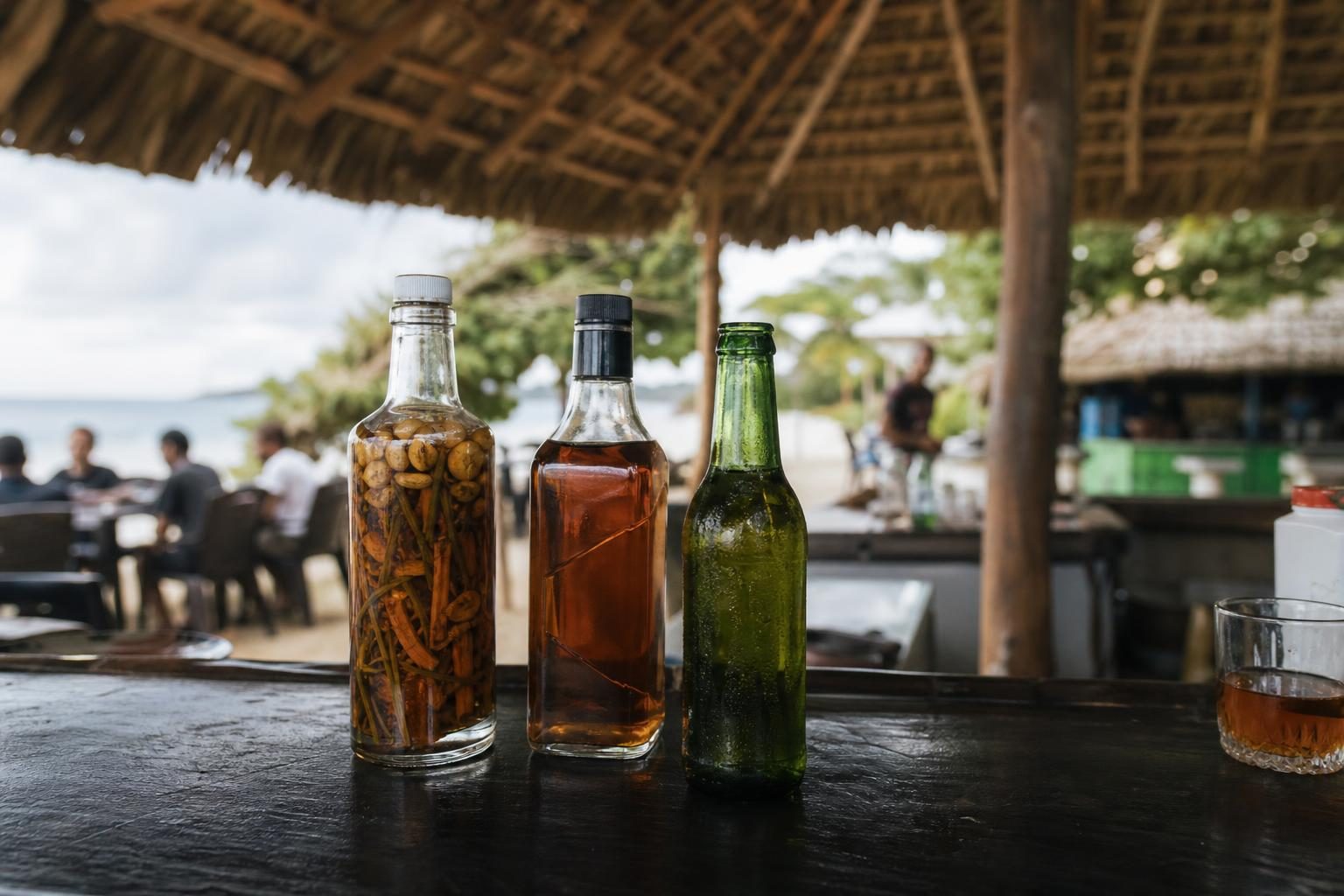
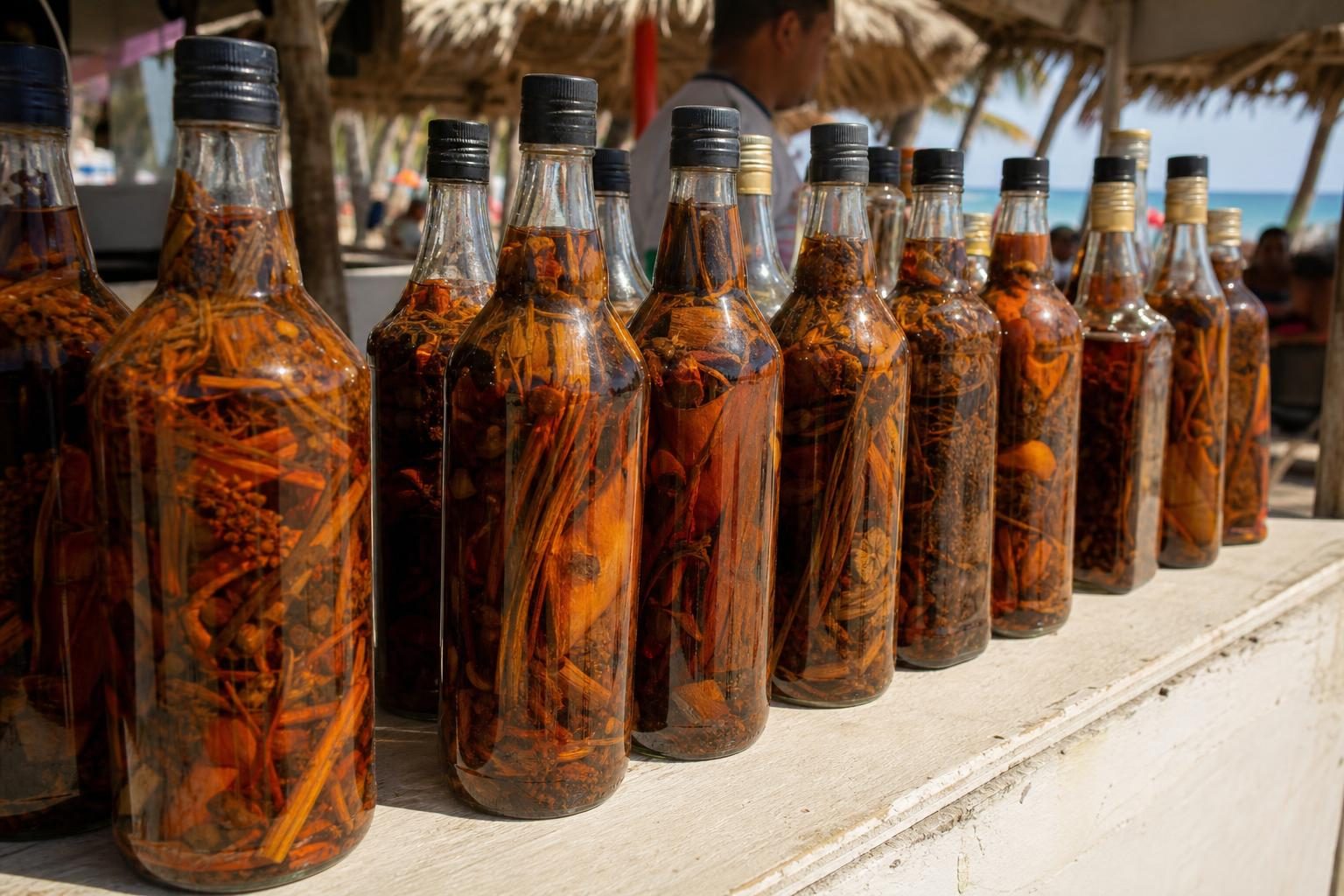
No article about drinking in the Dominican Republic can skip Mama Juana. It is not a commercial product — or at least, it does not have to be — and it is not easily categorised. At its core, Mama Juana is a mixture of rum, red wine and honey left to infuse with a bundle of tree barks, roots and herbs inside a sealed bottle or jar. The specific botanical mix varies from family to family and region to region, and that variation is part of its identity.
The drink has roots in Taíno herbal medicine, pre-dating European colonisation, and the practice of macerating plant material in alcohol for health purposes was reinforced when Spanish settlers arrived with wine. The result is something that sits between a folk remedy and a social drink. Many Dominicans will tell you it aids digestion, improves circulation or has other restorative properties; whether you believe that or not, it tastes genuinely interesting — earthy, slightly sweet, with a long finish that varies depending on which barks were used.
Where to find it
Mama Juana is not on the menu at every bar, but you will encounter it readily in a few situations. Market stalls — particularly at the Mercado Modelo in Santo Domingo — sell the dry botanical bundles so you can make your own, and vendors will explain what goes into their particular blend. Some restaurants in tourist areas offer a small glass as a digestif, and in rural communities it often appears at family gatherings without any ceremony at all. If you are offered a sip from a family's own batch, accept it; it is a gesture of welcome.
Pre-made commercial versions exist and are sold in souvenir shops near the cruise terminals. They are convenient but rarely as characterful as the home-macerated variety, which improves the longer the botanicals steep.
Presidente and Dominican beer culture
Presidente is the national beer, and it is drunk everywhere — from five-star resorts to roadside shacks with plastic chairs. It is a pale lager, light-bodied and clean, brewed to be served very cold. That last point matters: Dominicans are particular about temperature, and a lukewarm Presidente is considered a minor tragedy. If your bottle starts to feel warm, it is completely normal to ask for a fresh one or more ice.
Presidente comes in several formats — the standard 330 ml bottle, a larger mediana and the sharing-sized familiar — and you will also see Presidente Light, which has a following of its own. Beyond Presidente, the same brewery produces Bohemia, a slightly more flavourful lager that tends to attract drinkers who want something with a little more character. Quisqueya is another domestic lager worth trying if you see it, though distribution is patchier.
International beers are available in supermarkets and tourist-facing bars, but ordering one at a colmado when Presidente is on offer at a fraction of the price will raise an eyebrow or two. It is not offensive — just mildly puzzling to locals.
The colmado: a social institution
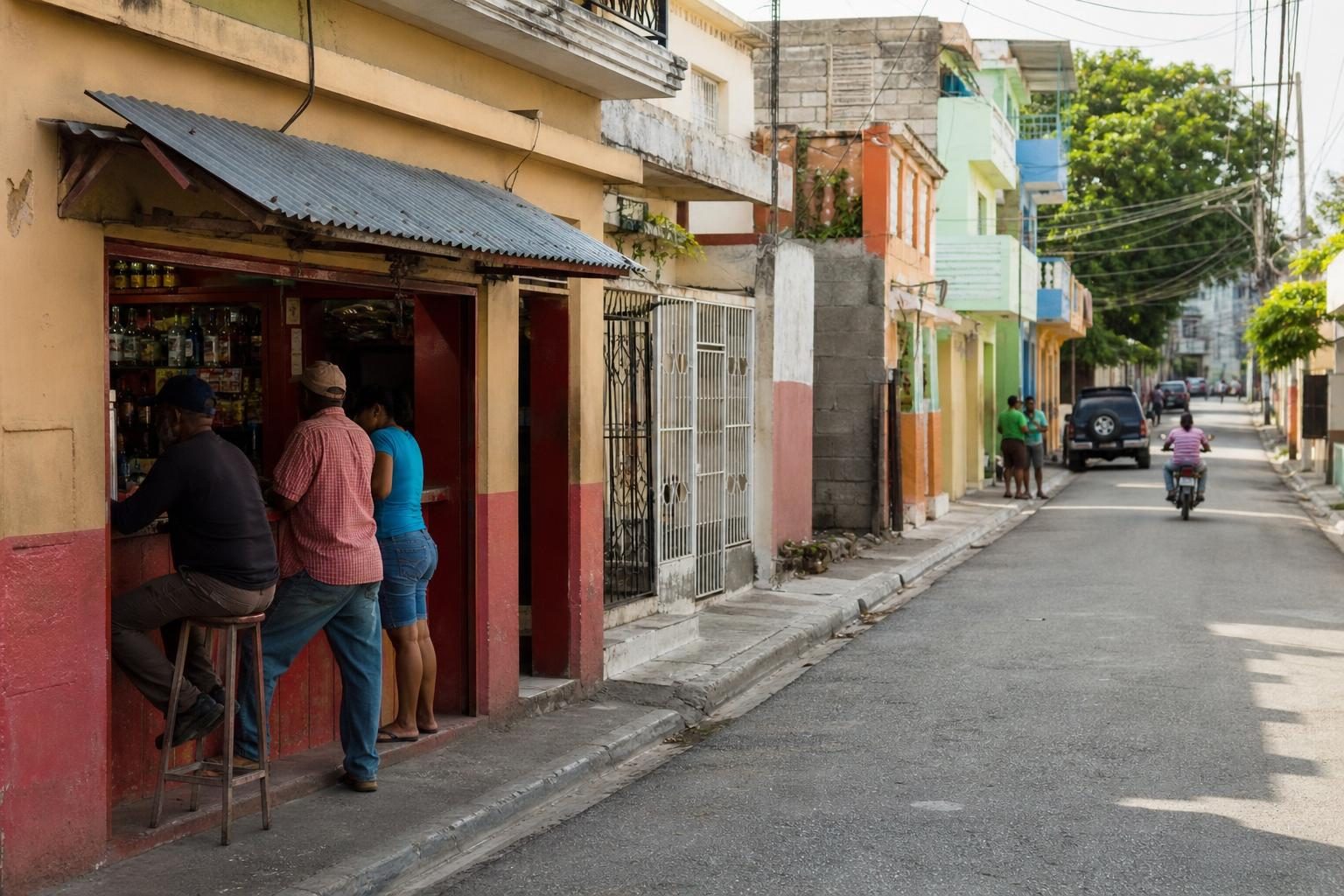
To understand Dominican drinking culture, you need to understand the colmado. Technically it is a neighbourhood convenience store — a small shop selling groceries, snacks, phone credit and cold drinks. In practice it is also the social hub of its street. Most colmados have a few plastic chairs or stools outside, a speaker playing merengue or bachata, and a constant flow of regulars stopping in for a beer or a small rum at any point from mid-morning onwards.
Colmados operate on a system called el fiado in many communities — a running tab of credit extended to trusted regulars — which speaks to how embedded they are in daily life. As a visitor, you simply pay as you go, and prices are low by any comparison. Buying your drink at the counter and joining the cluster of chairs outside is one of the most straightforward ways to have a genuine local experience, particularly in smaller towns where there are few bars in the conventional sense.
The colmado is also where you will hear Dominican music at its least curated: not a playlist designed for tourists, but whatever the owner or the regulars feel like playing, turned up to a volume that suggests the music is part of the furniture.
Drinking culture, safety and what to expect
Drinking in the Dominican Republic is a relaxed, sociable affair in most contexts, but a few honest notes are worth having before you head out.
Pace and hospitality
Dominicans are generous hosts and will often top up your glass without being asked, particularly in a home or at a colmado where someone has taken a liking to you. It is entirely acceptable to slow things down by holding your glass or simply saying "estoy bien" (I am fine). Nobody will take offence.
Tourist venues versus local bars
Prices at resort bars and tourist-facing venues can be several times higher than at a colmado or local restaurant. The drinks are not better — they are just in a different context. For rum especially, a glass of Brugal Añejo at a local spot will often cost less than a branded cocktail made with an inferior spirit at a beach club. It is worth venturing beyond the resort at least once.
Safety
As with anywhere, drinking heavily in an unfamiliar place carries risks. Stick to well-lit, populated areas at night, particularly in Santo Domingo and larger tourist towns. Keep your phone and valuables out of sight. If you are using alcohol purchased from a stall or an informal vendor rather than a sealed shop bottle, use common sense — the vast majority of what is sold is perfectly fine, but very cheap unlabelled spirits are worth approaching cautiously.
Non-alcoholic options
If you do not drink alcohol, you will not be an outlier. Fresh fruit juices (jugos naturales), morir soñando (a blend of orange juice and milk that tastes better than it sounds) and cold agua de coco straight from the shell are all readily available and genuinely good. Soft drinks are ubiquitous, and nobody will make you feel awkward for ordering one.
Frequently asked questions
What is the most popular rum in the Dominican Republic?
Brugal holds the largest share of the domestic market and is the rum you are most likely to encounter at a local bar or colmado. Barceló is the other major brand and tends to be more widely distributed internationally.
Can I buy Mama Juana to take home?
Yes, you can buy pre-made Mama Juana or the dry botanical bundle to make your own. Check the customs rules of your destination country before packing it, as some countries restrict the import of plant material or alcohol.
Is Presidente the only Dominican beer worth trying?
Presidente is the dominant choice, but Bohemia (from the same brewery) is worth trying if you want something with slightly more flavour. Quisqueya is another domestic option, though it can be harder to find outside larger towns.
Is it safe to drink at a local colmado as a tourist?
Generally, yes. Colmados are open, public spaces visited by all kinds of people throughout the day. The usual common-sense rules apply: be aware of your surroundings, keep valuables out of sight and drink at a sensible pace.
What do locals mix with rum?
Soda water and lime is the most common local mix, often called "rum con soda". Cola is also popular. Sweet tropical mixers are more a tourist-bar convention than a local habit.
Are there good non-alcoholic drinks in the Dominican Republic?
Absolutely. Fresh fruit juices, coconut water, morir soñando and a wide range of soft drinks are available everywhere. The tropical fruit on the island means fresh juices in particular are worth seeking out.