Santo Domingo's Colonial Zone: How to Spend a Day in the Oldest City in the Americas
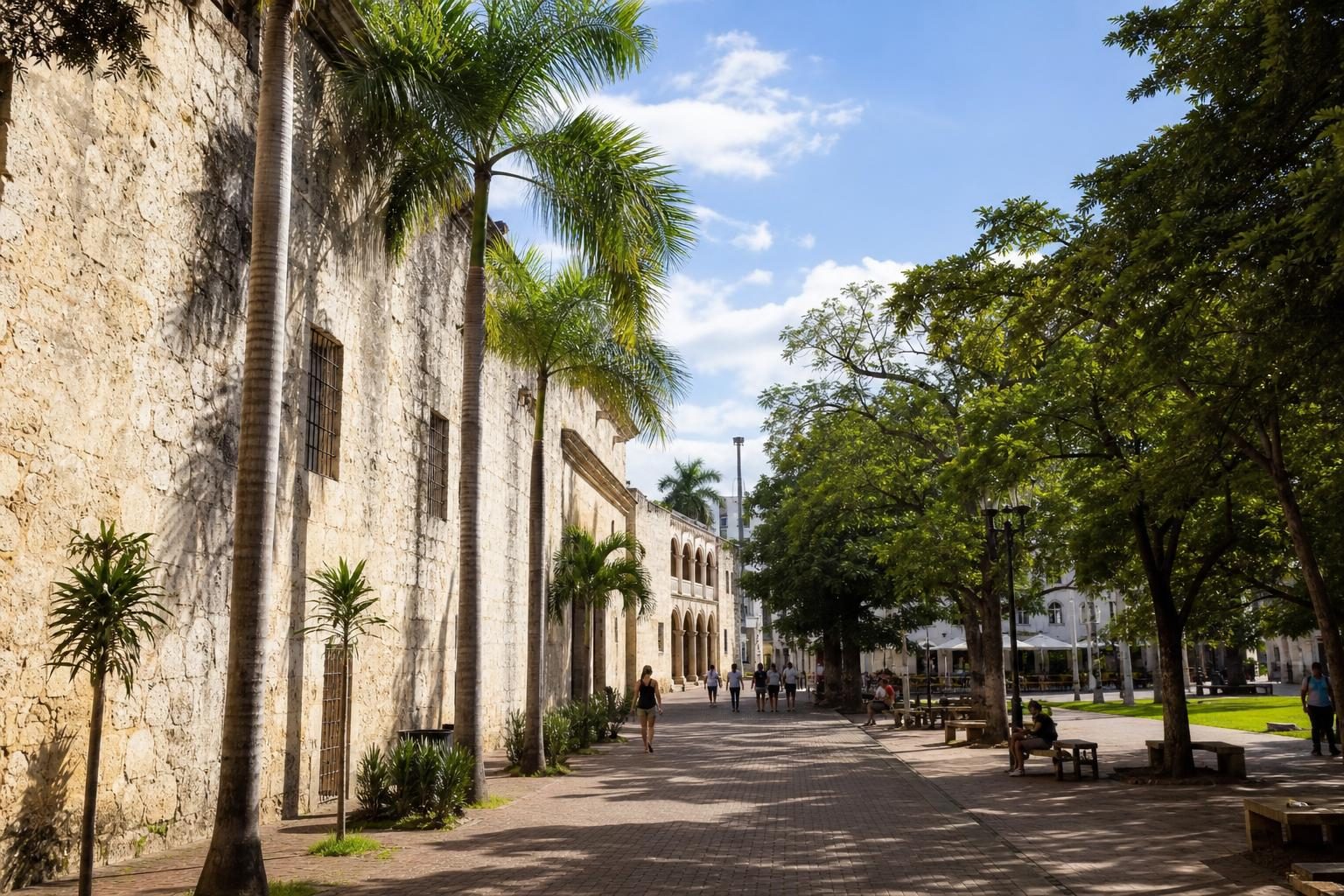
The Zona Colonial rewards slow, curious walking — centuries of history sit alongside neighbourhood life on streets that have been here since the late 1400s.
Clara · 19 November 2026 · 10 min read
When people picture the Dominican Republic, they tend to think of beach resorts and turquoise water. Santo Domingo rarely gets top billing. That is a mistake. The capital's Zona Colonial — a compact grid of streets on the western bank of the Ozama River — is a UNESCO World Heritage Site and, by most historians' reckoning, the oldest continuously inhabited European settlement in the Americas. The first permanent cathedral built in the New World stands here. So does the first paved street, the first university, the first hospital. Walking these blocks is not like visiting a recreated heritage precinct; this is a living neighbourhood, with washing strung between balconies and motorcycles weaving past sixteenth-century stone walls. It is imperfect, uneven and genuinely interesting.
This guide is built around a single day on foot. You do not need a guide, a tour bus or a hire car to see the Zona Colonial well — you need comfortable shoes, a rough sense of the layout and a willingness to slow down.
Zona Colonial at a glance
- Location
- Western bank of the Río Ozama, central Santo Domingo
- UNESCO status
- World Heritage Site since 1990
- Size
- Roughly 1 km² — easily walkable in a day
- Best days to visit
- Tuesday to Saturday; Sundays can be crowded, Mondays quieter for museums
- Currency
- Dominican peso (DOP); some vendors accept US dollars
- Language
- Spanish; basic phrases go a long way
Getting oriented: the layout of the zone
The Zona Colonial is bounded roughly by the Río Ozama to the east, the Malecón coastal avenue to the south, and a series of busier city streets to the north and west. Inside that boundary, the grid is small enough that you are rarely more than a ten-minute walk from anything you want to see.
The two main arteries are Calle El Conde — a pedestrianised shopping street that cuts east to west through the heart of the zone — and Calle Las Damas, which runs north to south along the river side and is widely regarded as the first paved street in the Americas. Most of the major monuments cluster near the intersection of these two streets and around Parque Colón, the central square.
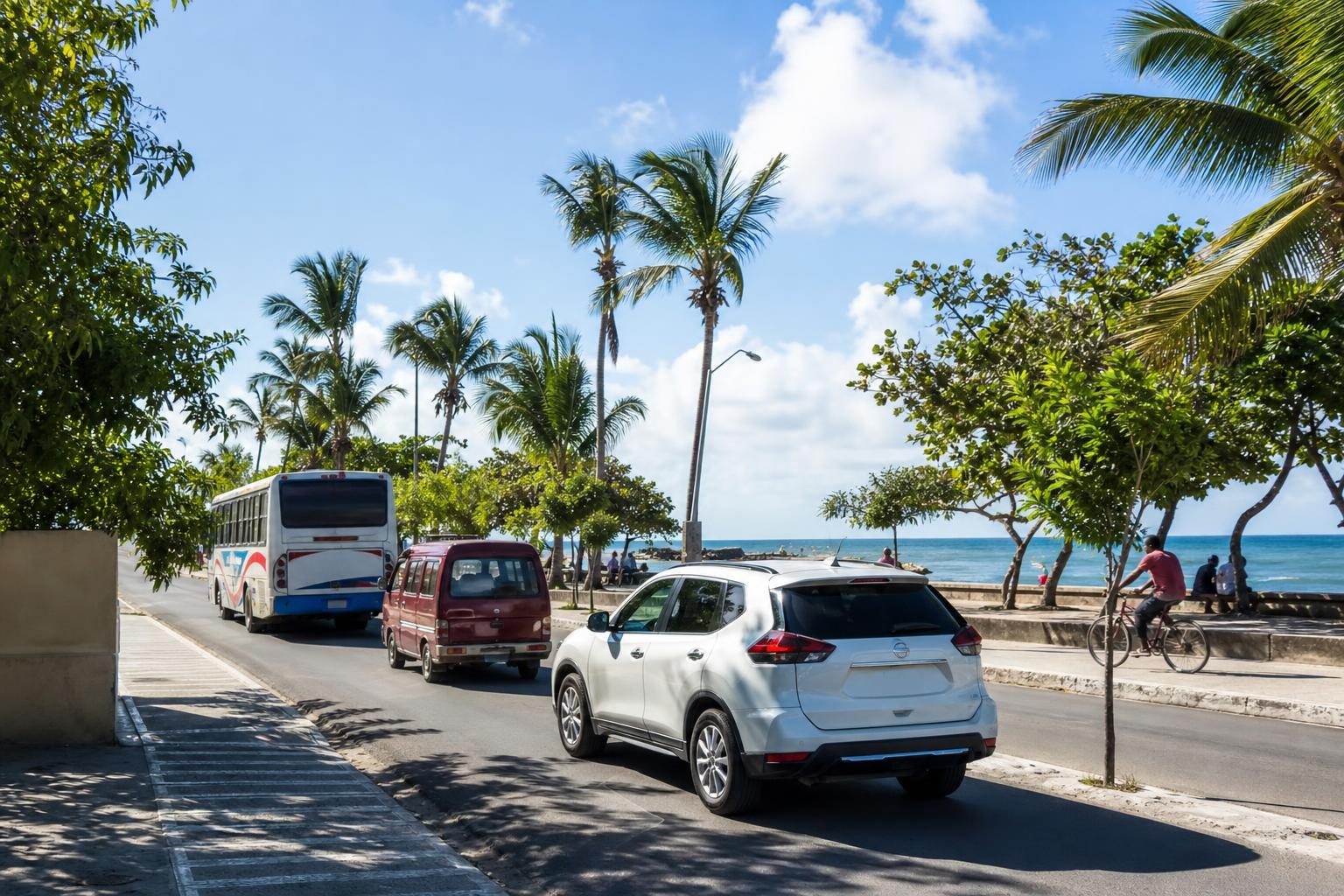
Navigation is straightforward, but the streets outside the pedestrian zone can be chaotic. Motorcycles (called motoconchos) treat red lights as advisory, and pavements are inconsistent. Walk facing traffic where there is no pavement, stay alert at crossings, and do not let the bustle put you off — it settles quickly once you are inside the quieter blocks near the river.
Morning: start at the cathedral and Parque Colón
Begin early, ideally before 9 am, when the air is cooler and the square still has a little calm about it. Parque Colón is a natural starting point: a broad plaza anchored by a statue of Christopher Columbus and flanked on its western side by the Catedral Primada de América.
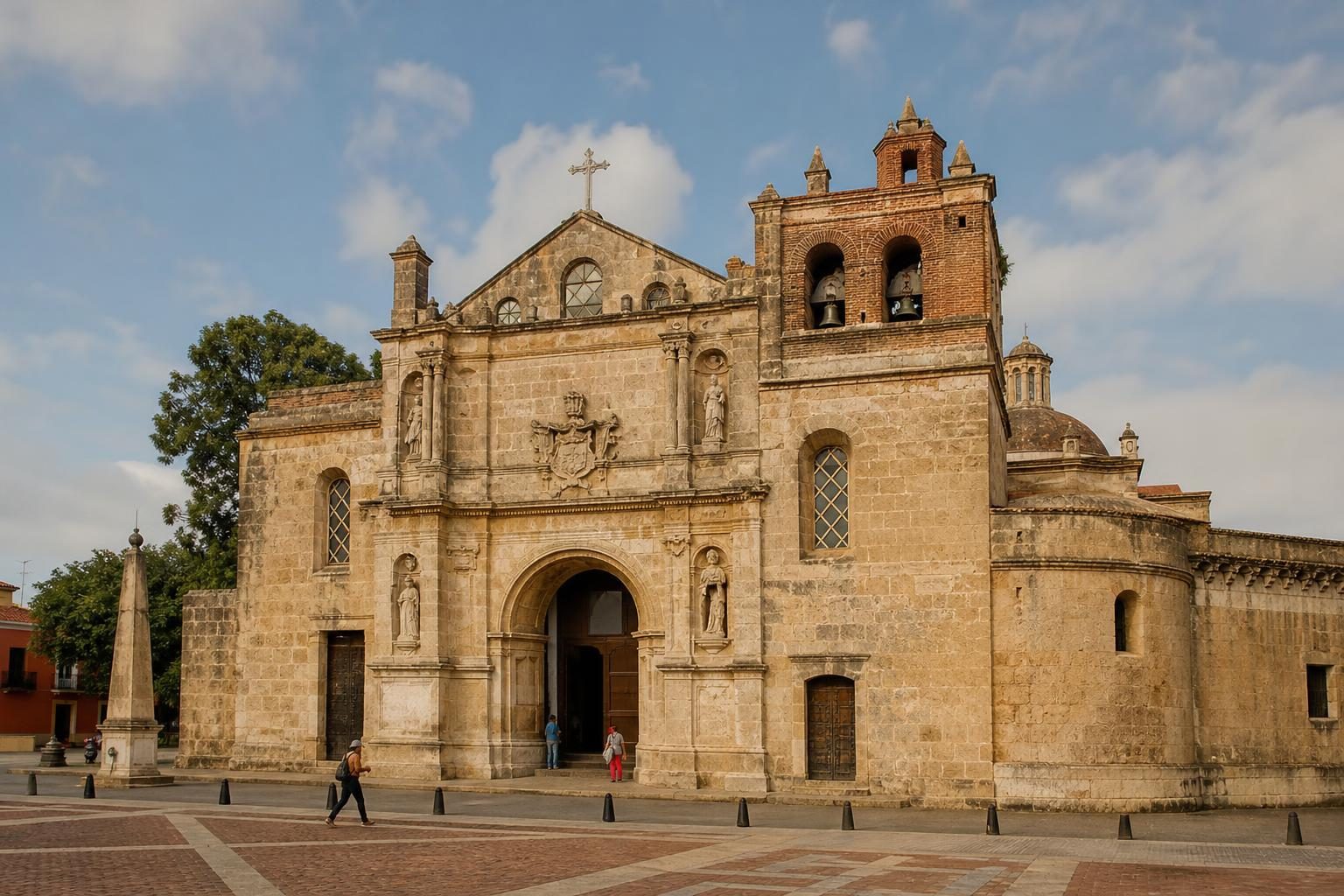
The cathedral, completed in the mid-sixteenth century, is the oldest in the Western Hemisphere. The facade is a layered mix of Gothic and Renaissance stonework — look for the carved details around the main entrance, which are easy to rush past. Inside, the nave is wide and relatively plain by European standards, which makes the light and the scale easier to appreciate. Entry is free, though a modest donation is customary, and you will be expected to cover your shoulders and knees.
From the cathedral, cross the park and walk a block south to reach Calle Las Damas. The street is lined with some of the most significant buildings in the zone, and walking it north to south gives you a clear sense of how the original colonial city was planned. The stone facades here are well maintained in places and visibly crumbling in others — the restoration work is ongoing and uneven, which is worth knowing before you arrive expecting uniform grandeur.
Mid-morning: Alcázar de Colón and the river views
At the southern end of Calle Las Damas, overlooking the Ozama River, stands the Alcázar de Colón — a palace built for Diego Columbus, son of Christopher, in the early sixteenth century. It is the most architecturally striking building in the zone: a two-storey limestone structure with a loggia of arched galleries that is immediately recognisable from photographs of the neighbourhood.
The interior has been restored and furnished to suggest how the palace might have appeared in the sixteenth century. The collection is worth an hour of your time, especially if you are interested in the early colonial period; interpretive material is available in both Spanish and English. Modest entry fees apply — check current prices at the door.
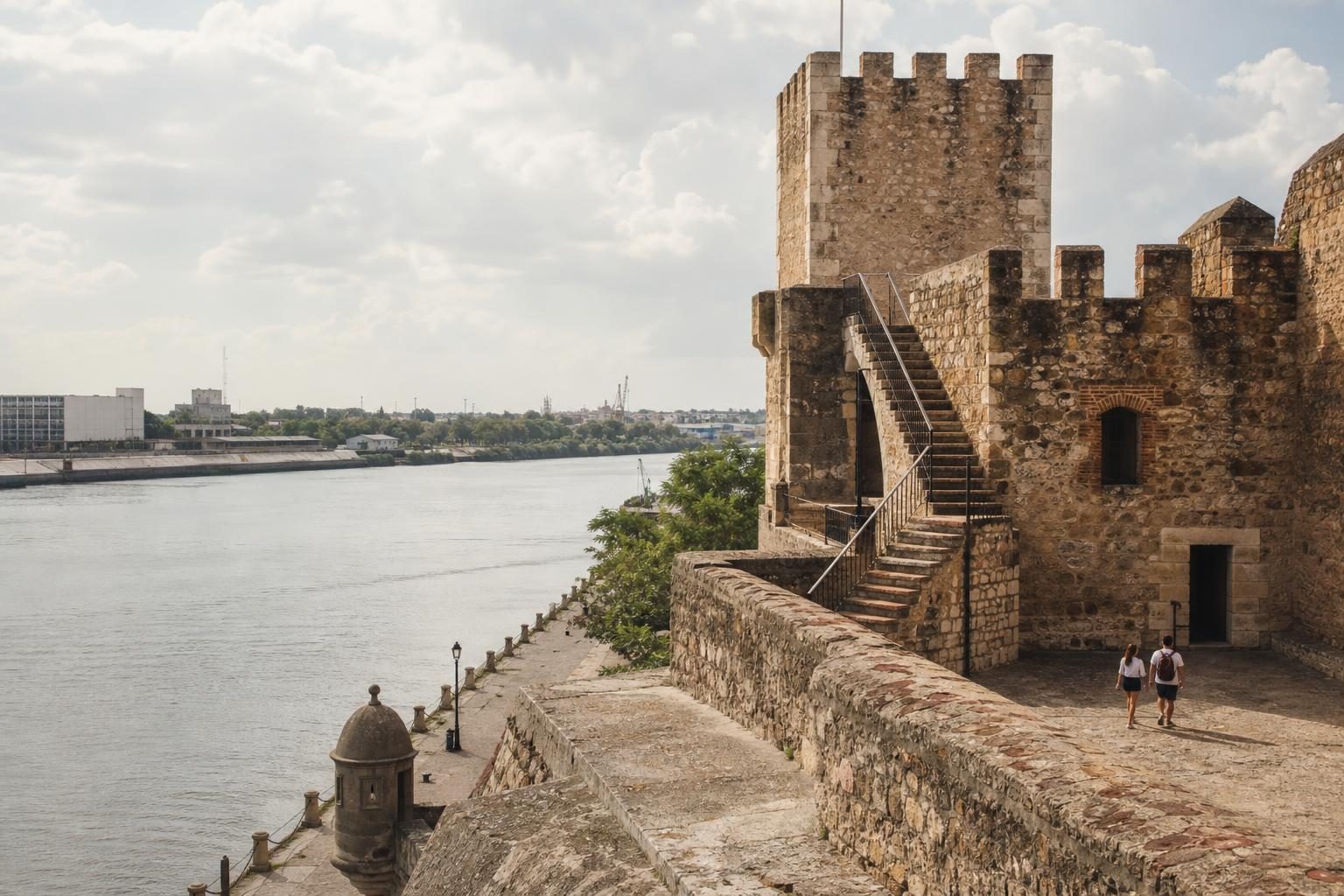
Directly in front of the Alcázar is Plaza de España, a large open square that gets lively in the evenings but is relatively quiet on a weekday morning. The square edges along the top of the old city wall, and you can walk a section of the fortifications for views down to the river and across to the eastern bank. Early morning is the best time for this — the light is softer and the heat has not yet built.
Also on Calle Las Damas, do not miss the Panteón Nacional, a former Jesuit church that now serves as a mausoleum for Dominican heroes. The interior is sombre and well preserved, with an enormous chandelier that was a gift from the Spanish government. Entry is free.
Where to eat in and around the zone
The Zona Colonial has no shortage of places to eat, though quality varies and tourist-facing restaurants around Parque Colón and the Calle El Conde strip tend to be overpriced relative to what they serve. With a little effort you can eat well here.
For a local breakfast
Look for small comedores — simple local eateries — on the streets just north of El Conde. A typical Dominican breakfast of mangú (mashed plantain), fried cheese and salami is filling, inexpensive and genuinely good. These places are rarely signposted in English; just follow where the locals are sitting.
For lunch
The streets around Calle Hostos and Calle Duarte, a short walk from the main sights, have a handful of well-regarded mid-range restaurants serving Dominican staples: la bandera (the national lunch of rice, beans and meat), grilled fish and fresh juices. Lunch is typically the main meal of the day for Dominicans, and restaurants are busiest between noon and 2 pm.
For a drink in the afternoon
Plaza de España has a row of bars and restaurants in the old warehouses (the Atarazanas) beneath the city wall. These are popular with both visitors and Santo Domingo residents in the late afternoon. The setting is attractive, the prices are higher than the city average, and the people-watching is good.
Afternoon: quieter corners and the Fortaleza Ozama
After lunch, the midday heat will encourage most visitors to slow down — which is exactly the right pace for the Zona Colonial's quieter blocks. The area south and east of Calle Las Damas rewards aimless walking: you will find small plazas, neighbourhood churches and stretches of the old city wall that see very few visitors.
The Fortaleza Ozama, just south of the Alcázar at the river's edge, is the oldest European military fortification in the Americas and worth a visit in its own right. The tower offers good views over the river mouth, and the grounds are well maintained. A small entry fee applies.
The Monasterio de San Francisco, a few blocks northwest of Parque Colón, is one of the more atmospheric sites in the zone precisely because it is a ruin — the original monastery was destroyed by earthquakes and hurricanes over the centuries and was never fully rebuilt. The shell of the building is intact, the arches are striking, and the site feels less curated than the main monuments. It has been used as an open-air events venue and can be accessed freely during the day.
By late afternoon, Parque Colón fills up again with residents and street vendors. Sitting on one of the benches as the light changes is a perfectly reasonable way to end your time in the zone.
Before you arrive: entry formalities
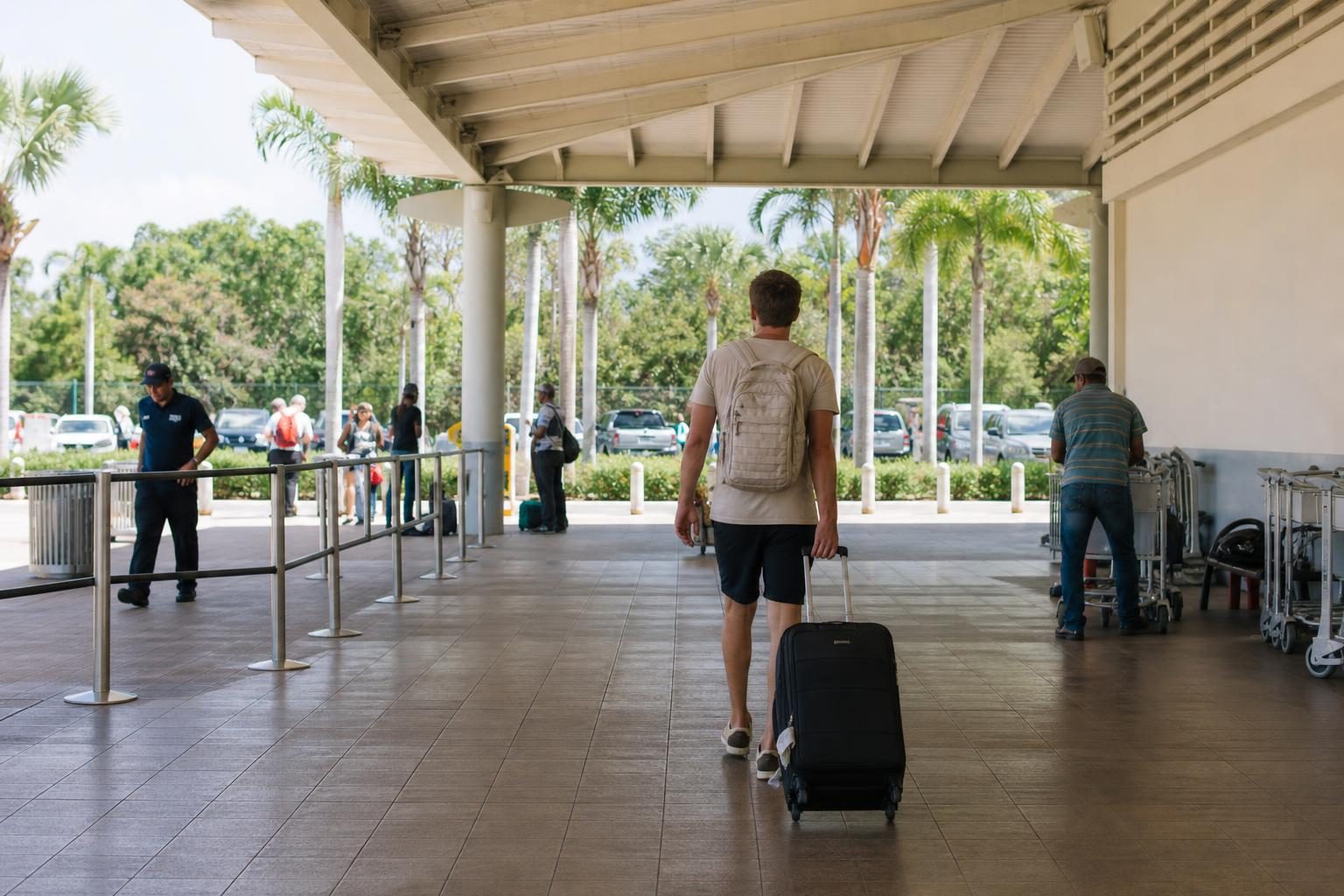
All visitors to the Dominican Republic are required to complete an E-Ticket — an electronic entry and health declaration — before travelling. This covers both your arrival information and your customs declaration, and it replaces the paper forms previously handed out on aircraft. You will need your E-Ticket QR code when you land at the airport, so it is worth sorting before you travel rather than scrambling at the gate.
Before your visit to the Zona Colonial
- Complete your Dominican Republic E-Ticket before departure
- Pack light, breathable clothing — and a layer for air-conditioned interiors
- Bring a small amount of Dominican pesos for comedores and small vendors
- Wear or bring comfortable, closed-toe shoes — cobblestones are uneven
- Cover shoulders and knees for cathedral and church visits
- Download an offline map — mobile data can be patchy in some blocks
- Start mornings early to beat both the heat and the tour groups
Frequently asked questions
How long does it take to walk the Zona Colonial?
The zone itself is only about one square kilometre, but a thorough visit — including time inside the main monuments — takes a full day. If you are short on time, three to four hours covering Parque Colón, the cathedral, Calle Las Damas and the Alcázar de Colón will give you a solid introduction.
Is the Zona Colonial safe to visit?
The well-visited areas around Parque Colón, Calle El Conde and Calle Las Damas are considered safe during the day. As in any city, stay aware of your surroundings, avoid displaying expensive cameras or phones unnecessarily, and use the main streets after dark rather than unlit side streets.
Do I need to pay to enter the main sites?
Some sites, including the Panteón Nacional and parts of the city walls, are free. Others, including the Alcázar de Colón and the Fortaleza Ozama, charge a modest entry fee. The cathedral is free but a donation is customary. Check at the door for current prices, as fees change periodically.
Is the Zona Colonial accessible for visitors with mobility difficulties?
The cobbled streets and uneven pavements make the Zona Colonial challenging for wheelchair users or anyone with limited mobility. Some of the major plazas and the pedestrianised stretch of El Conde are more manageable, but there are no guaranteed accessible routes through the whole area.
Can I visit the Zona Colonial as a day trip from Punta Cana?
It is possible but long — the drive is roughly three hours each way. Most people who make the trip join an organised day tour rather than hiring a car. If you want to spend meaningful time in the zone rather than rushing through it, consider staying overnight in Santo Domingo instead.
What language do I need in the Zona Colonial?
Spanish is the language you will need for navigating local restaurants, asking directions and communicating with smaller vendors. Staff at the main tourist-facing monuments often speak some English, but a handful of basic Spanish phrases will make your visit considerably smoother.