Passport and Visa Basics for the Dominican Republic
Visa rules for the Dominican Republic vary by nationality and change more often than many travellers expect — here is the general picture, plus where to find the authoritative answer for your passport.
Clara · 19 November 2026 · 9 min read
Getting your paperwork straight before a trip to the Dominican Republic is not complicated for most visitors — but it does require a little attention, because the rules are not identical for every nationality, and they change more often than airlines update their websites. This article gives you a clear framework for understanding how entry works: who typically needs a visa, who does not, what has replaced the old tourist card, and what actually happens when you hand over your passport at the border. Think of it as a starting point, not a substitute for checking with your country's embassy or consulate before you travel.
The general framework: visas and visa-free entry
The Dominican Republic operates a relatively open-door policy for tourists from many parts of the world. Citizens of a large number of countries — including most of Western Europe, North America, and many others — can enter without obtaining a visa in advance. If you fall into this category, you are generally permitted to stay for a set period as a tourist, after which you would need to either leave or regularise your status.
However, nationals of some countries are required to apply for a visa before travelling. These are typically obtained from a Dominican consulate or embassy in your home country, and the process involves submitting documents and, in some cases, attending an interview. The list of which nationalities need a visa and which do not is maintained by Dominican immigration authorities and can change, so the only reliable way to know your situation is to check with the nearest Dominican diplomatic mission well before your departure date.
It is also worth noting that holding a valid visa for certain other countries — the United States, the Schengen Area, Canada, and the United Kingdom among them — has historically allowed nationals of some countries to enter the Dominican Republic without an additional visa. The conditions and eligibility for this arrangement vary, so do not assume it applies to you without verifying first.
Entry at a glance
- Visa-free entry
- Available to nationals of many countries; check your specific situation
- Visa on arrival
- Not generally available; visas must typically be arranged in advance if required
- Entry document
- The E-Ticket (electronic form completed before arrival)
- Passport validity
- Must meet Dominican Republic requirements; check with your embassy
- Length of stay
- Typically up to 30 days for tourists, with extensions possible
- Currency declaration
- May be required above certain thresholds; declared on the E-Ticket
What happened to the tourist card?
For many years, visitors to the Dominican Republic were required to purchase a tourist card — a small physical document that was either bought at the airport on arrival or included in the price of an airline ticket. It was a simple arrangement, but it meant queuing to pay a fee or hoping your airline had already factored it in.
That system has now been replaced. The tourist card no longer exists as a separate purchase. Instead, the entry fee and all relevant arrival information have been folded into the E-Ticket, an electronic form that all travellers must complete before they arrive in the Dominican Republic. The E-Ticket covers customs and health declarations as well as the standard entry details, and it is free to complete through the official Dominican Republic channels — though third-party services exist that can help you fill it in correctly for a fee.
If your last trip to the Dominican Republic involved buying a small paper card at the airport or ticking a box on your airline booking, things work differently now. Everyone needs to submit the E-Ticket before boarding.
Your passport: what to bear in mind
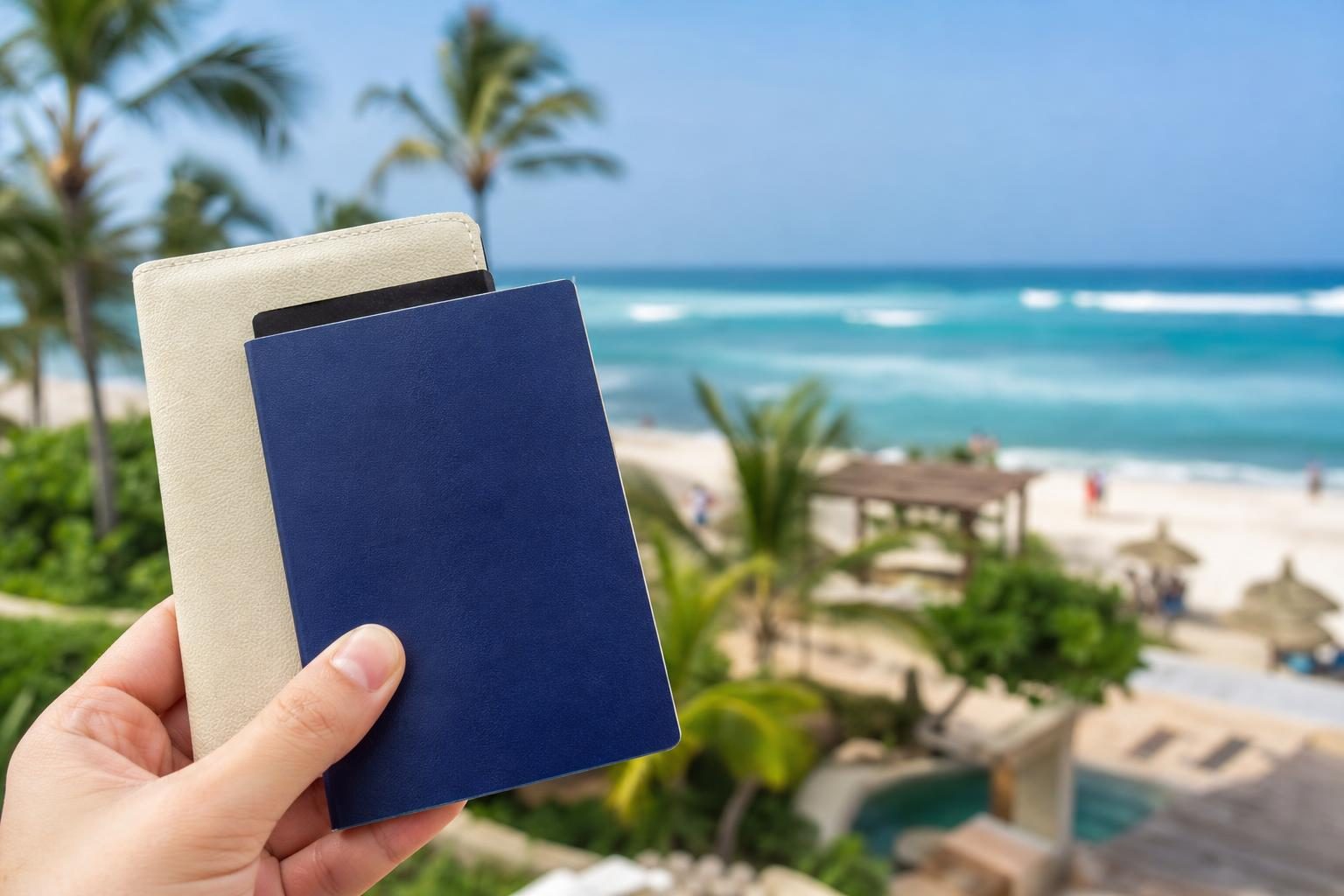
Whatever your nationality, your passport needs to be valid for travel to the Dominican Republic. The exact validity requirement — how many months must remain on your passport beyond your travel dates — is set by Dominican immigration and may also be influenced by your airline's own policies, since carriers can be held responsible for carrying passengers who are subsequently refused entry.
A few practical points worth checking before you travel:
- Passport validity: Check the Dominican Republic's current requirement for your nationality. Many countries advise having at least six months' validity beyond your planned departure date, but you should verify the specific rule rather than assume.
- Blank pages: Immigration officers need space to stamp your passport. Make sure you have at least one or two clear pages available.
- Damaged passports: A passport that is significantly damaged — torn cover, water damage, missing pages — may be refused at the border even if it is technically within its validity period. Renew it before you travel if there is any doubt.
- Name consistency: The name on your passport must match the name on your airline ticket and your E-Ticket exactly. Even minor discrepancies can cause delays.
What to expect at passport control
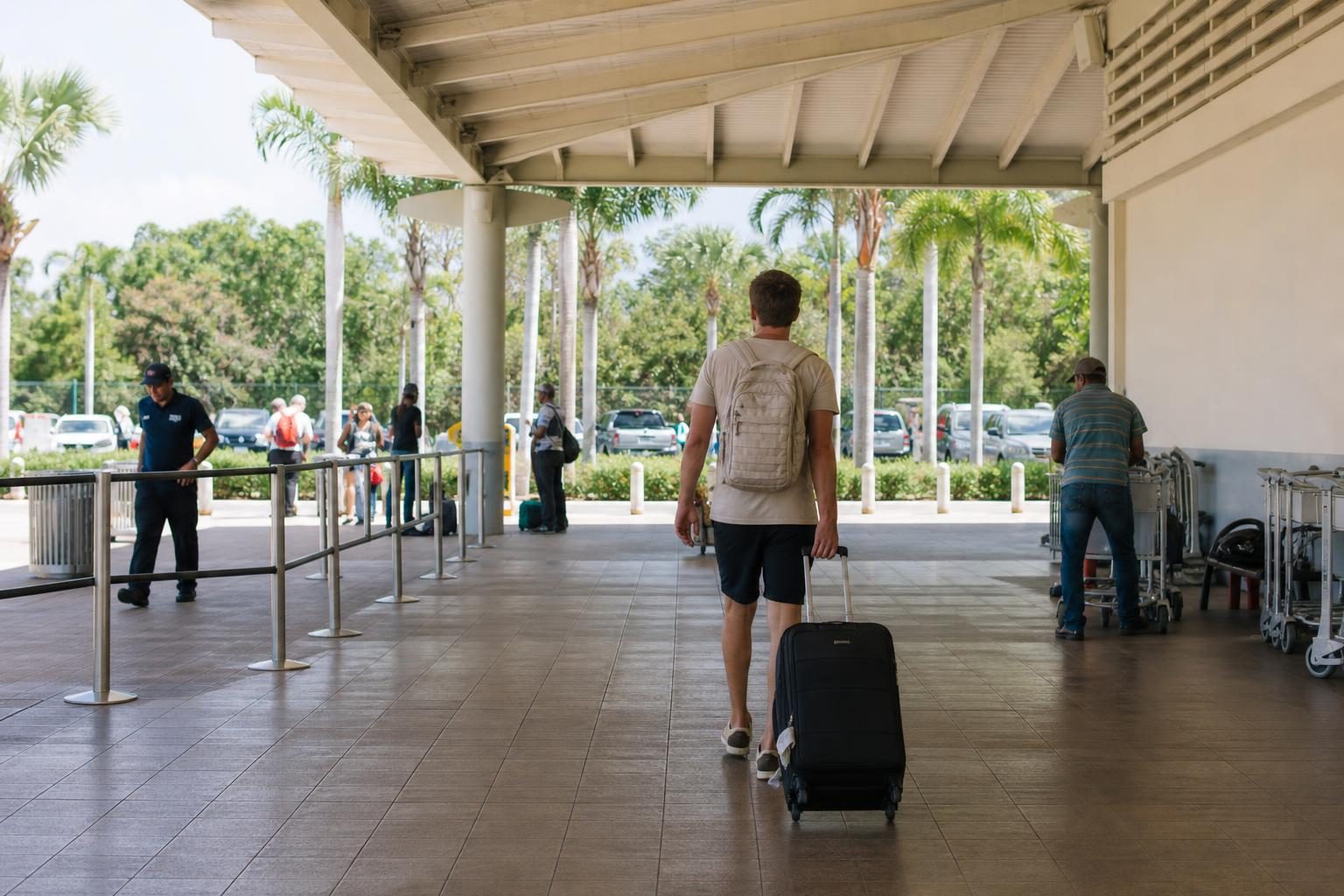
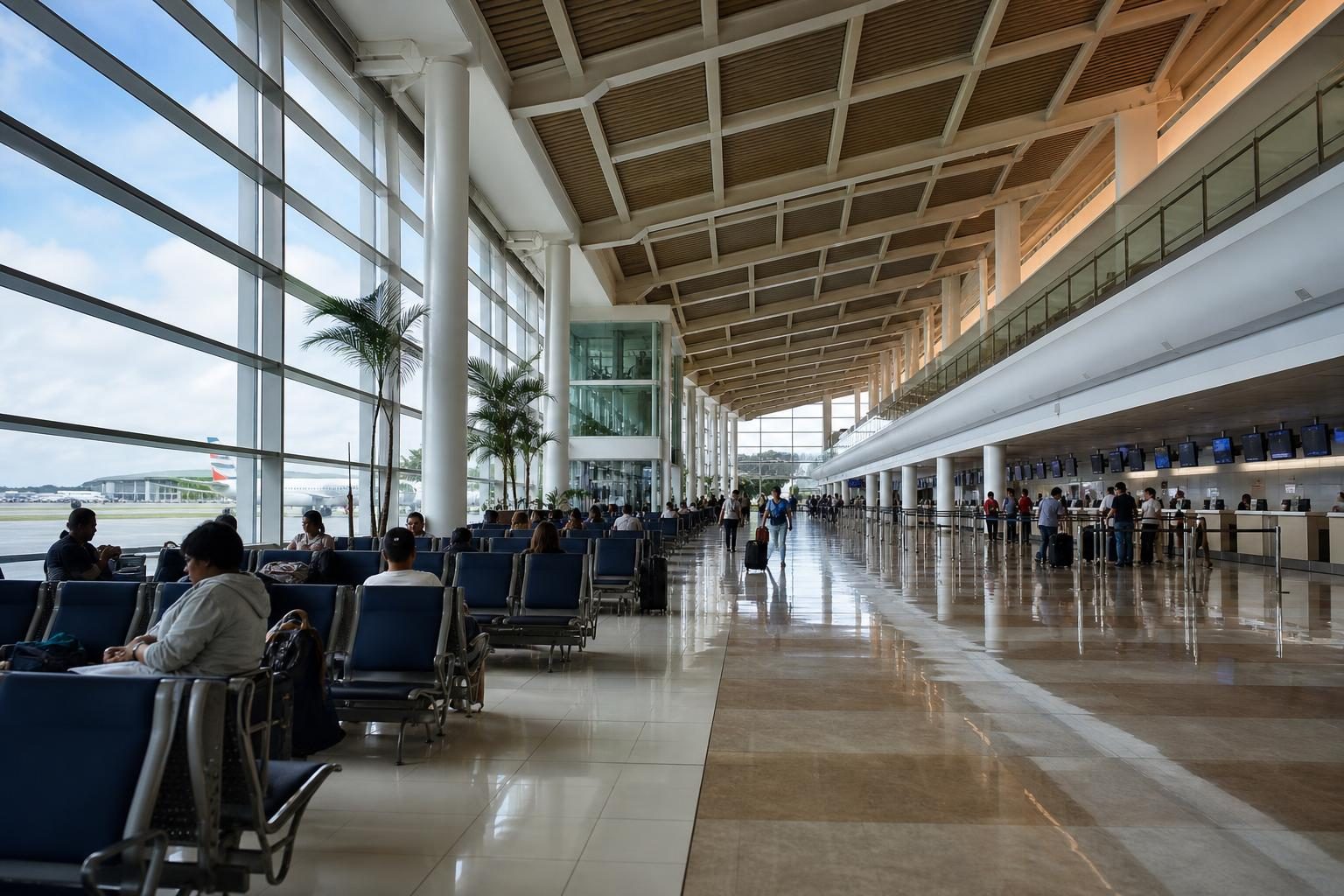
Arriving at a Dominican airport for the first time can feel chaotic, particularly at Punta Cana, which handles enormous volumes of charter and package-holiday flights. Knowing what to expect makes the process much smoother.
Before you queue
You will need your E-Ticket QR code ready — either on your phone or printed out. Border officers will scan or check this as part of the entry process. If you have not completed your E-Ticket before arriving, you may be directed to complete it on a kiosk or face delays, so it is strongly advisable to sort it in advance.
At the desk
Hand over your passport and your E-Ticket confirmation. The officer may ask you a few routine questions: where you are staying, how long you plan to remain, and sometimes the purpose of your visit. These are standard questions — answer them calmly and honestly. If you are staying in a hotel, knowing the name and address is useful. If you are staying with friends or in a rental, have that address to hand.
Biometrics
Fingerprinting and photographs are taken at passport control as a matter of routine. This is standard procedure and applies to virtually all international arrivals.
After passport control
Once through immigration, you collect your checked baggage and pass through customs. Your E-Ticket will have covered your customs declaration, but officers can still ask questions or request to inspect bags. Keep receipts for any significant purchases or valuables you are bringing into the country.
Before you fly: entry document checklist
- Confirm whether your nationality requires a visa in advance
- Check your passport validity meets Dominican Republic requirements
- Ensure your passport has at least one or two blank pages for stamps
- Complete your E-Ticket and save the QR code confirmation
- Make sure your name matches exactly on your passport, ticket and E-Ticket
- Note your accommodation address in the Dominican Republic
- Declare any currency or goods above permitted thresholds on the E-Ticket
If something goes wrong at the border
It is rare, but entry can be refused. This is more likely if there is a document problem — an expired passport, a missing visa, a mismatch in personal details — than if everything is in order. Here is what to know if things do not go smoothly.
If you are refused entry, you will typically be held in a secure area of the airport and placed on the next available return flight to your point of departure. The airline that carried you may be fined for bringing an inadequately documented passenger, which is one reason airlines check documents carefully at check-in. This is not a situation you can usually appeal on the spot — the time to resolve document problems is before you travel.
If your E-Ticket has an error, such as a wrong date or misspelled name, raise it with immigration officers calmly and show your supporting documents. Minor errors do not automatically mean refusal, but significant discrepancies can cause serious delays. It is far better to review your E-Ticket carefully before submission than to try to correct it at the border.
If you lose your passport while in the Dominican Republic, contact your country's embassy or consulate in Santo Domingo as soon as possible. They can issue an emergency travel document, though the process takes time. Keep a photo or photocopy of your passport's data page stored separately — this makes the replacement process considerably faster.
If you overstay your permitted time, you will face an overstay fee when you leave. The amount increases with the length of the overstay. This is not a criminal matter for short overstays, but it does need to be settled at the airport before you can depart, and it can complicate future visits.
Frequently asked questions
Do I need a visa to visit the Dominican Republic?
It depends on your nationality. Many travellers from Western Europe, North America, and elsewhere can enter without a prior visa, but nationals of some countries must apply in advance. Check with the nearest Dominican consulate or your government's travel advice service before you book.
What is the E-Ticket and do I really need to complete it?
The E-Ticket is a mandatory electronic entry form that all travellers must submit before arriving in the Dominican Republic. It replaced the old tourist card system and covers your entry details, customs declaration, and health information. Without it, you may face significant delays or be unable to board your flight.
Is the tourist card still required?
No. The Dominican Republic phased out the separate tourist card. The entry fee and arrival information are now handled through the E-Ticket, which you complete online before you travel.
How long can I stay in the Dominican Republic as a tourist?
Most visitors are granted up to 30 days on arrival, though the precise period can vary. Extensions can be requested through Dominican immigration before your permitted stay expires. Overstaying results in a fee payable on departure.
Can I extend my stay once I am in the country?
Yes, it is possible to extend a tourist stay through the Dominican Republic's General Directorate of Migration. The process involves an application and a fee. It is advisable to begin this process before your original permitted period expires rather than waiting until the last day.
What happens if I arrive without completing the E-Ticket?
You may be directed to complete it at a kiosk in the arrivals hall, but this is not guaranteed and will cost you time. Some airlines may refuse to board passengers who have not completed it. Complete it before you leave home to avoid any complications.
My passport expires in a few months. Can I still travel?
Possibly, but you need to verify the Dominican Republic's specific validity requirement for your nationality, and also check your airline's rules. If there is any doubt, renewing your passport before travelling is strongly advisable.